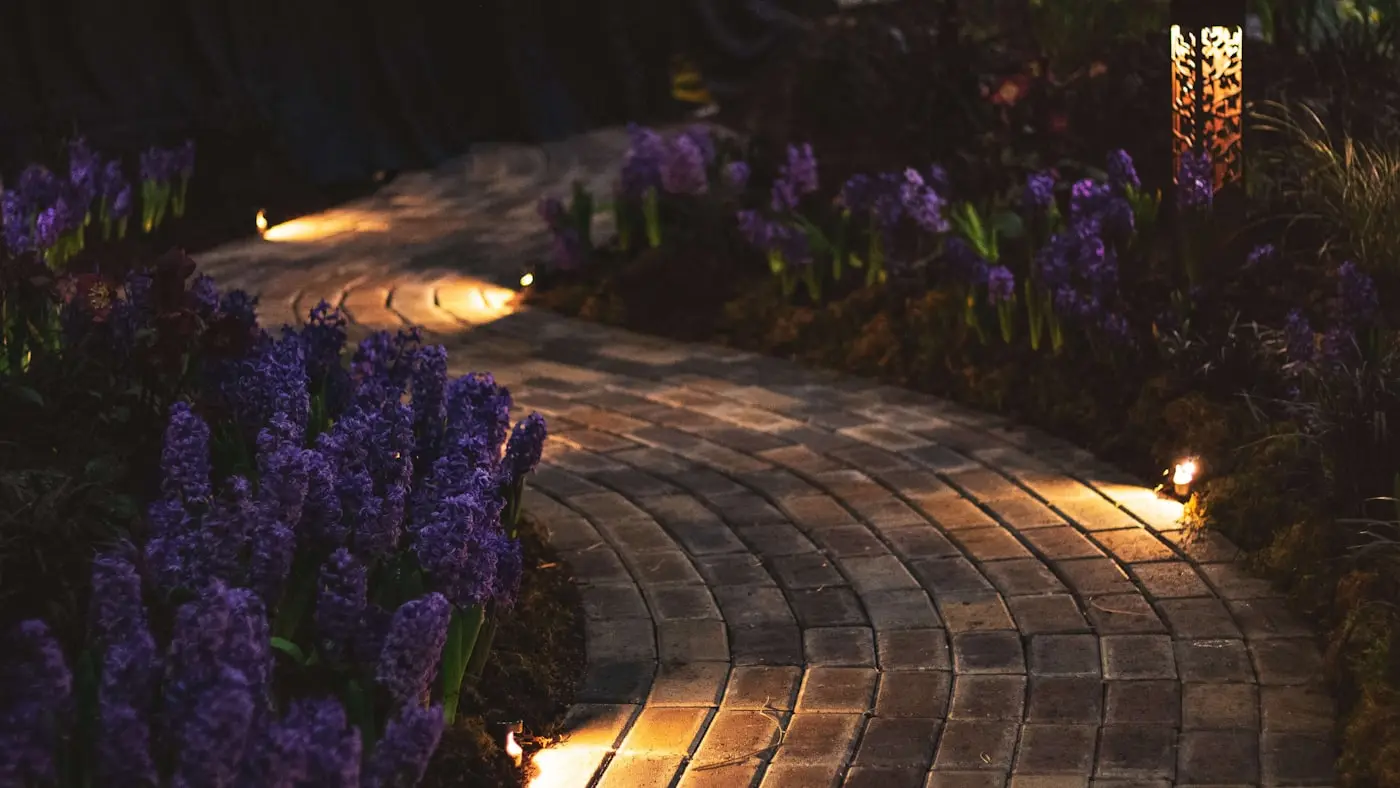
Patio laying in Yorkshire costs £60-220 per square metre in 2026, with a typical 20m² rear garden patio running from £1,200 at the budget end (concrete flags, basic prep) to £4,400 at the top (premium porcelain, full drainage). Yorkshire prices typically sit 10-15% below London and South East rates. On clay-heavy Yorkshire ground, drainage preparation adds £200-600 to most jobs. Local pavers in Leeds, Sheffield, Harrogate, and York will assess your ground conditions before pricing.
| Material | Installed cost per m2 | Typical 20m2 total |
|---|---|---|
| Gravel | £20-40/m2 | £400-800 |
| Concrete flags | £60-100/m2 | £1,200-2,000 |
| Indian sandstone | £100-180/m2 | £2,000-3,600 |
| Natural slate | £90-140/m2 | £1,800-2,800 |
| Porcelain tiles | £120-220/m2 | £2,400-4,400 |
| Reclaimed York stone | £150-250+/m2 | £3,000-5,000+ |
All prices include excavation, sub-base, laying, and jointing. Add £300-600 for drainage on Yorkshire clay sites. Old patio removal costs £150-400 extra.
The honest short answer: a professionally laid patio in Yorkshire in 2026 costs between £60 and £220 per square metre, depending almost entirely on which surface material you choose. A standard 20m2 patio (a 4 x 5 metre space, the most common size for a rear garden seating area) runs from roughly £1,200 at the budget end (concrete flags, basic prep) to £4,400 at the top (premium porcelain, full drainage, quality finish). Those numbers assume reasonable ground access and average soil conditions. On Yorkshire clay, ground preparation costs are higher than on lighter soils, and drainage cannot be an afterthought.
This guide gives you the real numbers for Yorkshire in 2026, explains what drives prices up and down, and covers the Yorkshire-specific considerations, particularly around clay soil and the persistent damp that makes drainage and surface treatment more important here than in drier parts of the country.
One honest caveat: we are a gardening service, not specialist pavers. This guide is here to help you understand what you should be paying and what questions to ask, not to position us as patio specialists. What we can genuinely help with is the garden work around a new patio: clearance before it goes in, planting and landscaping after, and ongoing garden maintenance that makes the whole space look its best.
What does patio laying cost per m2 in Yorkshire?
A standard 20m² patio in Yorkshire costs £1,200-2,000 for concrete flags or £2,000-4,400 for porcelain. The table below breaks down supply costs, fully laid prices, and a 15m2 patio estimate by material so you can compare like-for-like.
| Patio Material | Supply Only (per m2) | Laid Price (per m2) | 15m2 patio estimate |
|---|---|---|---|
| Concrete flags | £8-15 | £50-80 | £750-1,200 |
| Indian sandstone | £20-35 | £80-120 | £1,200-1,800 |
| Porcelain | £30-60 | £100-160 | £1,500-2,400 |
| Natural slate | £25-50 | £90-140 | £1,350-2,100 |
For a full installed price including sub-base and ground preparation, see the table below covering all main surface types.
| Surface type | Cost per m2 (installed) | Typical notes |
|---|---|---|
| Concrete flags | £60-100/m2 | Budget-friendly, durable, widely available |
| Indian sandstone | £100-180/m2 | Popular choice; needs sealing in Yorkshire's climate |
| Limestone / slate | £110-190/m2 | Distinctive look; slate especially good in northern light |
| Block paving | £80-160/m2 | Flexible, traditional; weed-prone in Yorkshire damp |
| Porcelain tiles | £120-220/m2 | Premium; impervious surface suits Yorkshire's wet climate |
| Reclaimed Yorkshire stone | £150-250+/m2 | Beautiful, authentic, difficult to source, premium price |
These are supply-and-lay prices including ground preparation, sub-base, laying, and jointing. They do not automatically include skip hire, access surcharges, slope levelling, or drainage installation; see below for how these add to the total.
What Does a Patio Quote Include in Yorkshire?
A standard patio quote covers excavation, sub-base, sand or mortar bed, laying, and jointing. Skip hire, slope levelling, and drainage installation are often charged separately; always ask each contractor to specify what is included.
Understanding what a patio quote should cover is essential before you compare prices. The range between the cheapest and most expensive quote for the same job often comes down to what is included in the ground preparation, not the surface material itself.
Excavation
A patio requires excavating the existing ground to the correct depth, typically 200-250mm below the finished surface level. That means removing soil, breaking up any compacted areas, and getting the base level and consistent. On a 20m2 patio, excavation generates roughly 4-5 tonnes of spoil that needs to go somewhere. Most quotes include skip hire or green waste disposal; some do not. If it is not clear, ask.
On Yorkshire clay, excavation takes longer than on lighter soils. Clay is heavier, stickier, and harder to remove cleanly. An experienced paver will allow more time (and price accordingly) for clay ground preparation; a cheaper quote on the same clay garden may be cutting corners on the excavation depth, which causes the finished patio to move and settle unevenly within a few years.
Sub-base
The sub-base is the structural foundation the slabs sit on. For most domestic patios, this is 100-150mm of compacted MOT Type 1 crushed aggregate (hardcore). On Yorkshire clay, 150mm is the minimum to provide adequate stability. On soft or disturbed ground, or where significant loads (heavy garden furniture, vehicles) are expected, 200mm may be specified.
This is the part of the job homeowners see least but matters most. A premium porcelain surface on an inadequate sub-base will crack and move within years. Concrete flags on a correctly prepared 150mm sub-base will outlast almost anything. Ask your paver specifically: what depth and specification of sub-base is included?
Sand bed and laying
Over the sub-base goes a 30-50mm bed of sharp sand (for natural stone and concrete flags) or a mortar bed (for porcelain tiles, which need a firmer and more precise bed). The slabs are then laid, levelled, and cut to fit around the edges. Jointing compound or pointing mortar fills the gaps between slabs and determines how the finished surface looks and how well it resists weed growth.
Labour rates in Yorkshire
Paving labour in Yorkshire typically runs at £25-35 per hour, slightly below the national average. A two-person team laying a 20m2 patio spends roughly 2-3 days on the job at those rates. Labour constitutes roughly 40-50% of the total installed cost on a standard domestic patio. On complex jobs with intricate cutting, difficult access, or significant level changes, that proportion rises.
How much does it cost to lay a patio in 2026?
A small 9m² patio costs £540-1,980 installed; a medium 20m² runs £1,200-4,400; a large 30m² costs £1,800-6,600. The figures below cover three popular surface types.
| Size | Concrete flags | Indian sandstone | Porcelain |
|---|---|---|---|
| Small: 3m x 3m (9m2) | £540-900 | £900-1,620 | £1,080-1,980 |
| Medium: 4m x 5m (20m2) | £1,200-2,000 | £2,000-3,600 | £2,400-4,400 |
| Large: 5m x 6m (30m2) | £1,800-3,000 | £3,000-5,400 | £3,600-6,600 |
| Very large: 6m x 7m (42m2) | £2,520-4,200 | £4,200-7,560 | £5,040-9,240 |
These are indicative figures for average ground conditions. Add 15-25% for Yorkshire clay sub-base requirements, difficult access, or significant slope levelling. Subtract 10-15% if your garden has easy rear access for a small excavator, which speeds the groundwork considerably.
Patio Laying Cost by Job Size in Yorkshire
| Patio size | Concrete flags | Indian sandstone | Porcelain |
|---|---|---|---|
| Small: 10m2 (e.g. 2m x 5m) | £600-1,000 | £1,000-1,800 | £1,200-2,200 |
| Medium: 20m2 (4m x 5m) | £1,200-2,000 | £2,000-3,600 | £2,400-4,400 |
| Large: 40m2 (5m x 8m) | £2,400-4,000 | £4,000-7,200 | £4,800-8,800 |
All prices include excavation, sub-base, laying, and jointing. Add £300-600 for drainage on Yorkshire clay. Add 15-25% for restricted access or sloped sites.
Job size affects total patio cost in two distinct ways. The first is simply scale: a 40m2 patio uses roughly four times the materials of a 10m2 patio and the labour scales accordingly. The second effect works in the opposite direction: many overhead costs, including delivery charges, mobilisation time, skip hire, and drainage installation, are largely fixed regardless of patio size. This means the cost per m2 is often slightly higher on small jobs (under 15m2) than on medium and large ones.
A 10m2 patio (roughly 2m x 5m, suitable for a small bistro table and chairs) is the entry point for professionally laid hard standing in Yorkshire. At this size, a concrete flag patio costs £600-1,000 all in; a basic sandstone patio costs £1,000-1,800. Some Yorkshire pavers apply a minimum call-out charge of £500-700 for very small jobs, so ask before assuming the per-m2 rate applies to areas under 8m2.
A 20m2 patio (4m x 5m) is the most common size for a rear garden seating area and the size most Yorkshire pavers use as a benchmark for their day-rate pricing. The per-m2 prices across all materials tend to be closest to the headline rates at this size.
A 40m2 patio (approximately 5m x 8m) is a generous space by domestic Yorkshire standards. At this scale, the fixed overhead costs reduce per m2, and it is worth asking pavers for their best rate on larger jobs. Drainage design becomes even more critical at this scale; a poorly drained 40m2 patio on Yorkshire clay carries a substantial reinstatement cost if it fails.
Yorkshire Patio Costs: What Affects the Price
Four factors determine what you pay for a patio in Yorkshire: material choice, labour rates, ground preparation requirements, and drainage. Understanding each one helps you compare quotes on equal terms rather than just looking at headline prices.
Material choice
Material is the biggest single variable. Concrete flags are the most affordable at £60-100/m2 installed; Indian sandstone sits in the mid-range at £100-180/m2 installed (or £80-120/m2 supply and lay without sub-base); porcelain ranges from £100-160/m2 supply and lay to £120-220/m2 fully installed including sub-base and mortar bed. Natural stone including limestone and reclaimed Yorkshire stone runs from £70-130/m2 upwards depending on grade and availability. Your patio laying contractor can advise on which material suits your garden, budget, and Yorkshire climate.
Labour rates
Paving labour in Yorkshire runs at £175-£300 per day depending on crew size and complexity. A two-person team on a standard 20m2 patio typically spends 2-3 days on the job, so labour alone accounts for £300-900 before materials or sub-base costs. Specialist work such as porcelain on mortar, complex cutting patterns, or multi-level terracing sits toward the upper end of that range. Yorkshire day rates run 20-30% below the national average.
Ground preparation
Good ground preparation is invisible once the slabs are down but determines whether a patio lasts 5 years or 25. Standard preparation requires excavating to 200-250mm depth, compacting 150mm of MOT Type 1 sub-base, and laying a sand or mortar bed over it. On Yorkshire clay, 150mm of sub-base is the minimum; soft or previously disturbed ground may need 200mm. Ground preparation typically accounts for 25-40% of the total installed cost. If significant vegetation or old paving needs clearing before work starts, our garden clearance cost guide covers what that preparation typically adds to the project budget.
Drainage requirements for Pennine clay soils
Yorkshire's Pennine clay soils extend across most of Bradford, Leeds, Wakefield, Halifax, and the western half of the county. Clay does not drain naturally, so any patio on clay ground needs a designed drainage solution from day one. The standard requirement is a 1:80 fall toward a channel drain connecting to a soakaway or surface water drain. Installing a linear channel drain and soakaway adds £300-600 to a standard job. On Pennine clay this is not optional; a patio without drainage will pool water, shift the sub-base, and require relaying within a decade. Any patio quote for a Yorkshire clay site that makes no mention of drainage should prompt a direct question before you accept it.
What Adds to the Cost of a Patio in Yorkshire?
The three most common cost adders in Yorkshire are restricted access (narrow side passage surcharges of £300-800), slope levelling on hilly sites, and drainage installation on clay soil.
Access: the narrow side passage surcharge
Many Yorkshire semi-detached and terraced properties have a narrow side passage as the only access to the rear garden. Anything under 900mm wide means a mini-digger cannot get through, all spoil and materials have to be wheelbarrowed by hand, and the job takes significantly longer. Expect a surcharge of £300-800 on a standard patio job when access is tight. If access is very restricted (under 600mm), the premium can be higher. Some pavers will ask to see the access route before quoting, which is the right approach.
Slope and level changes
Yorkshire gardens are frequently on slopes, particularly in Bradford, Halifax, Sheffield, and the hillier parts of Leeds. A patio on a sloped site requires either cutting into the slope (more excavation, spoil disposal) or building up one side (retaining wall, additional fill). Both add cost. A modest 200-300mm level change across a 20m2 patio might add £400-800 to the total. More significant changes can approach or exceed the base patio cost itself. On steeper slopes, garden decking is worth considering as an alternative: a deck frame is built level on posts of varying heights without the excavation a patio requires.
Drainage installation
This is the Yorkshire-specific cost that catches people out. Yorkshire clay does not drain naturally, and a flat or near-flat patio on clay will hold surface water unless drainage is designed in from the start. A proper drainage solution means installing a 1:80 gradient across the surface towards a channel drain or linear drain at the patio edge, which connects to a soakaway dug into permeable ground or to an existing surface water drain.
Installing a linear channel drain and connecting it to a soakaway adds £300-600 to a standard patio job. It is not optional on clay. A patio quote that does not mention drainage at all for a Yorkshire clay garden is either incomplete or relying on the fact that standing water will be your problem, not theirs, once they have been paid.
Yorkshire clay drainage: the critical question to ask every paver
Before accepting any patio quote in Yorkshire, ask specifically: "How are you handling drainage, and what fall are you building in?" A minimum 1:80 gradient towards a drainage point is the standard. If a paver cannot answer this question clearly, or says drainage is not necessary, find someone else. Standing water on a clay-based patio is not a minor cosmetic issue; it causes long-term slab movement, frost damage, and algae growth. Getting drainage right costs a few hundred pounds more upfront; getting it wrong costs you a new patio in 10 years.
Which Patio Surface Works Best in Yorkshire's Climate?
Porcelain is the lowest-maintenance option for Yorkshire's wet climate; concrete flags offer the best value at £60-100/m²; Indian sandstone is the most popular mid-range choice but needs sealing every 2-3 years to resist algae.
Concrete flags: practical and underrated
Concrete flags have a reputation as the boring choice, but modern concrete paving has come a long way. Good-quality concrete flags (the kind sold at decent builders' merchants rather than the cheapest possible product) are durable, frost-resistant, and available in a range of finishes and colours. They are also the most straightforward to lay precisely and the easiest to replace if a single slab cracks or needs lifting for pipe access.
For Yorkshire's climate, concrete flags are a sound practical choice. They are not affected by Yorkshire's damp the way natural stone can be, they do not require sealing, and they handle freeze-thaw cycles well when laid on a proper sub-base. The argument against them is purely aesthetic; they look functional rather than beautiful. If the patio is mainly a practical space rather than a showpiece, concrete flags at £60-100/m2 installed are hard to beat on value.
Indian sandstone: the popular mid-range choice
Indian sandstone dominates the mid-range patio market in Yorkshire; it is what most people picture when they think of a natural stone patio. The warm buff, ivory, and silver-grey tones work well with Yorkshire brick and stone houses, it is available in regular sawn-edge formats (easier to lay) or natural riven finishes, and it costs less than domestic stone while looking considerably better than concrete.
The Yorkshire-specific warning: Indian sandstone in a damp, north-facing Yorkshire garden will develop a green algae patina within 2-3 years unless it is sealed. The porous surface absorbs moisture and provides an excellent substrate for algae. Sealing with a quality impregnating sealant before the patio is used, and reapplying every 2-3 years, dramatically reduces this. A sealed Indian sandstone patio in Yorkshire stays looking good; an unsealed one requires either regular pressure washing or tolerance for a green tinge by year three.
Porcelain: the low-maintenance premium choice
Porcelain patio tiles have grown significantly in popularity over the last five years, and for Yorkshire's climate they make particular sense. The manufacturing process produces a completely non-porous surface; water cannot penetrate it, which means algae cannot colonise it the way it does on natural stone. Rain runs off rather than soaking in. The surface cleans easily. It does not need sealing.
The downsides: porcelain costs more (£120-220/m2 installed), is harder to cut precisely (requires a specialist wet saw, as cheap cutting produces chipping at the edges), and requires a mortar bed rather than a sand bed, which demands more skill and care from the installer. The surface can also be slippery when wet if the tile is not specified correctly. Ask specifically for an R11 or R12 anti-slip rated tile for external use in Yorkshire's wet climate.
Block paving: traditional but maintenance-intensive
Block paving (the small clay or concrete blocks you see on driveways and some traditional patios) has genuine advantages: individual blocks are moveable if you need access to pipes below, the surface is flexible under vehicle loads, and the traditional look suits older Yorkshire properties well. In sheltered, well-drained gardens it works well.
Yorkshire's persistent damp makes block paving maintenance-intensive. Weeds push up through the joints relentlessly. Moss and algae colonise between the blocks. Without a robust weed membrane and regular treatment, a block paved patio in a typical Yorkshire garden will have weeds within its first summer. The solution is using a polymeric jointing sand (which sets firm and resists weed growth) and laying on a proper membrane. But even with those precautions, block paving requires more maintenance in Yorkshire's climate than concrete or porcelain.
Reclaimed Yorkshire stone: beautiful and expensive
Reclaimed Yorkshire sandstone or limestone flags (the kind salvaged from old buildings, farmyards, and mill floors) are the most authentic surface for older Yorkshire properties. The worn, warm tones of 100-year-old stone are impossible to replicate with new materials. They also come with provenance: there is something satisfying about paving your garden with stone that has been in Yorkshire for generations.
The catch is supply and price. Good-quality reclaimed Yorkshire stone is increasingly difficult to source and commands a premium: expect £150-250/m2 or more depending on quality, size, and availability. Reclaimed stone is also rarely flat: the laying takes more time and skill to achieve a level surface from irregular-thickness flags. Budget for premium pricing and accept some variation in surface texture as part of the character.
Cheapest Patio Options in Yorkshire
The cheapest professionally laid patio in Yorkshire is concrete flags at £60-100/m2 installed. A 20m2 concrete flag patio costs £1,200-2,000 fully installed including sub-base and drainage, significantly less than the £2,000-3,600 for sandstone or £2,400-4,400 for porcelain.
| Option | Installed cost per m2 | 20m2 total | Key trade-off |
|---|---|---|---|
| Gravel | £20-40/m2 | £400-800 | Not true hard standing; drifts onto lawn |
| Concrete flags | £60-100/m2 | £1,200-2,000 | Functional look; best value hard paving |
| Reconstituted stone | £70-100/m2 | £1,400-2,000 | Better appearance than concrete at a modest premium |
| Natural slate | £90-140/m2 | £1,800-2,800 | Distinctive look; lower maintenance than sandstone |
| Indian sandstone | £100-180/m2 | £2,000-3,600 | Most popular mid-range; needs sealing in Yorkshire's climate |
Three ways to keep Yorkshire patio costs as low as possible without cutting corners on what matters:
- Choose concrete flags or reconstituted stone. Modern concrete paving comes in riven and textured finishes that closely resemble natural stone. At £60-100/m2 installed, concrete flags give the best cost-to-durability ratio of any patio material and require no sealing in Yorkshire's damp climate.
- Keep the design simple. Straight cuts on standard 600x600mm slabs cost considerably less in labour than mixed-material layouts, pattern designs, or large-format tiles requiring a wet saw and mortar bed. Every hour saved on complex cutting reduces the total bill.
- Book off-peak. April and September are quieter than the May-August peak. Some Yorkshire pavers offer better availability and occasionally sharper pricing for spring or autumn slots.
The one cost never worth reducing on a Yorkshire budget patio: sub-base and drainage specification. On Yorkshire clay, a correctly specified 150mm MOT Type 1 sub-base and a designed 1:80 drainage gradient is what makes a budget concrete flag patio last 20-plus years rather than need relaying within a decade. A budget surface on a properly prepared sub-base will always outlast a premium material on a thin, poorly drained base.
Why Does Every Yorkshire Patio Need a Drainage Plan?
Yorkshire clay does not drain naturally, so standing water on a poorly designed patio is almost inevitable. A minimum 1:80 gradient toward a channel drain is non-negotiable on most Yorkshire clay sites.
It is worth restating this clearly: drainage is not optional for a patio in Yorkshire. The combination of clay soils (across most of Bradford, Leeds, Wakefield, Barnsley, Rotherham, and Sheffield) and Yorkshire's reliable rainfall makes standing water on an improperly drained patio almost inevitable.
The drainage requirement affects both the design and the cost. Every patio surface (even permeable block paving) needs to have a designed gradient. The standard is a 1:80 fall (12.5mm of drop per metre of run) leading to a channel drain, surface water drain, or soakaway. On a 4m-wide patio, that means the far edge needs to be 50mm lower than the house edge. This has to be built in from the sub-base level upwards.
A soakaway dug into permeable ground below the clay layer is an option in some Yorkshire gardens, but it requires testing to confirm the ground below the clay is permeable enough. On many sites it is simpler and more reliable to connect to an existing surface water drain. If you are on a sloped site, gravity does the drainage work for you, which is one advantage of Yorkshire's hilly topography.
For existing patios with drainage problems, pressure washing and treatment can address algae and surface issues, but it cannot fix an underlying drainage design problem. That requires lifting slabs, regrading the sub-base, and installing a proper drainage channel, which is essentially a patio reinstallation.
Yorkshire-Specific Patio Considerations
Yorkshire's climate, geology, and building heritage create patio considerations you will not find in generic UK cost guides. This section covers the local stone options, freeze-thaw risk, the most common installation mistakes, and when DIY versus professional installation makes sense.
York stone: the local heritage choice
York stone (more precisely, Yorkshire sandstone) is the warm buff stone that has paved Yorkshire's towns, mill yards, and farmsteads for hundreds of years. Salvaged York stone flags from demolitions, old pavements, and farmyards are the most authentic surface you can lay in a Yorkshire garden. The worn, warm-toned character of century-old stone is impossible to replicate with new materials, and there is something genuinely satisfying about using stone that has a long Yorkshire provenance.
The practical reality: good reclaimed York stone is in short supply and rising in price. Expect £150-250/m2 or more fully installed, and accept that sourcing takes time. New-quarried Yorkshire sandstone is available from Pennine quarries at £100-180/m2 installed; it lacks the patina of reclaimed stone but has the same geological credentials and handles Yorkshire's climate well. If you want Indian sandstone's warm tones but prefer a local origin, ask your paver specifically about new Yorkshire sandstone.
Gritstone: the Pennine alternative
Gritstone is the coarser, harder stone of the Pennine moorland, found in abundance across West and South Yorkshire. As a patio material it is less commonly specified than York sandstone but suits the setting better on rural properties, farmhouses, and exposed upland gardens. Its rough texture provides excellent grip in wet conditions and it is highly frost-resistant, performing better than finer-grained stones in north-facing or shadow-heavy gardens that do not thaw quickly in winter. Gritstone flags cost £80-160/m2 laid in Yorkshire, depending on source, thickness, and format.
Freeze-thaw cycles and Yorkshire winters
Yorkshire's climate exposes patio surfaces to repeated freeze-thaw cycles from November through March. Water that has penetrated a porous slab surface or pooled below a slab expands by roughly 9% when it freezes; over multiple cycles, this lifts and fractures even good-quality slabs. The consequences are most severe in north-facing gardens that stay damp and do not thaw quickly after overnight frosts.
Two defences apply: correct drainage from day one (so water does not pool on or under the surface), and using a surface material that resists water penetration. Porcelain is the most freeze-thaw resistant option because its impervious surface absorbs no water at all. Concrete flags perform well when laid on a proper sub-base and do not need sealing. Indian sandstone and limestone need sealing every 2-3 years to reduce water absorption; unsealed natural stone in an exposed Yorkshire location is the most vulnerable to freeze-thaw damage. This is one material consideration that is genuinely more important in Yorkshire than in the drier parts of England.
Common mistakes that cause Yorkshire patios to fail
Most Yorkshire patio failures trace back to one of three installation mistakes, all invisible under the finished surface.
The first and most common is no drainage gradient. A patio laid flat on Yorkshire clay will hold water within one or two winters. As surface water freezes and the clay below expands and contracts seasonally, slabs begin to rock, crack, and rise at the edges. Within 5-10 years a flat patio on clay typically needs full reinstatement. The correct specification is a 1:80 fall (12.5mm drop per metre of run) from the house toward a drainage point, built into the sub-base from the start.
The second mistake is under-specifying the sub-base. On Yorkshire clay, a 100mm sub-base is rarely adequate; 150mm of compacted MOT Type 1 is the minimum, and 200mm is better practice on soft, made-up, or previously disturbed ground. A thinner sub-base on clay allows the surface to flex and settle as the clay below shifts seasonally, breaking the jointing first and then the slabs themselves.
The third mistake is using the wrong jointing compound. Standard mortar and dry sand pointing breaks down within a few seasons in Yorkshire's damp climate, allowing water and weed roots into the joints. Specifying a proper exterior jointing compound (polymeric mortar or an equivalent) adds a small cost to the job but makes a significant difference to long-term performance.
DIY patio laying versus hiring a professional in Yorkshire
DIY patio laying is viable for small, straightforward jobs on favourable ground. Materials for a 20sqm concrete flag patio run to around £150-400 (flags, sub-base aggregate, sand, jointing compound); professional installation for the same job costs £1,200-2,000, making the apparent saving £800-1,600. In practice, the saving is smaller: hiring a mini-digger for excavation costs £150-300/day, skip hire for spoil removal runs £200-400, and tool hire for compaction adds more. Any mistake in sub-base depth or drainage gradient means lifting and relaying at full cost.
On Yorkshire clay with any drainage complexity, the risk of getting it wrong is high enough that professional installation is clearly worth the cost. The break-even point where DIY genuinely makes sense is a small job (under 15sqm), flat ground, light soil, straightforward access, and no drainage complications. For the typical Yorkshire rear garden on clay with a narrow side passage, professional installation is the right call.
How Do I Find a Reliable Patio Layer in Yorkshire?
Get at least three written quotes, asking each contractor to specify excavation depth, sub-base specification, and drainage plan. Ask to see a recently completed job in your area before committing.
Patio laying is a specialist trade. Most garden centres or landscaping companies can lay a patio, but the quality of ground preparation varies widely. Here is what separates reliable work from quick jobs that look fine on day one and fail within five years.
- Get at least three quotes, and ask each one to specify excavation depth, sub-base specification, and drainage plan in writing. Not verbally: in writing.
- Ask whether they are members of any trade association. BALI (British Association of Landscape Industries) membership is one indicator of professional standards.
- Ask to see a recently completed job in your area. Any competent paver should have local reference sites they are happy to show you.
- Be suspicious of quotes that are significantly cheaper than others without explanation. The difference is almost always in the ground preparation, which you will not see once the slabs are down.
- Ask specifically: "What do you do about drainage on clay soil?" If they look blank or dismiss the question, find someone else.
As a gardening service, we are not patio specialists, but we regularly work alongside paving teams on garden projects. We can help with the garden clearance before a patio goes in and the planting, border work, and ongoing maintenance after. For the paving work itself, visit our patio laying service page to request quotes from vetted local pavers. See our garden design consultations if you want help thinking through the whole garden space, including where a patio fits in the overall layout. See also our spring garden tidy guide for the best timing to commission new garden improvements.
Frequently Asked Questions
How long does a patio take to lay?
A 9m2 patio takes 1-2 days including ground preparation. A 20m2 patio takes 2-3 days. Larger patios (40m2 and above) typically take 3-5 days. Natural stone and porcelain take longer to cut and lay than concrete flags. On Yorkshire clay, allow an extra half day for excavation and sub-base work on any size job. Mortar-bed installations (required for porcelain) take longer than sand-bed work.
Do you need planning permission for a patio in Yorkshire?
For most rear garden patios, no. Permitted development rights cover rear garden hard surfaces. Front garden patios over 5m2 using impermeable surfaces may require permission under surface water drainage rules. Use permeable paving in front gardens to avoid this requirement. Check with your local authority if uncertain; Leeds, Bradford, Sheffield, Harrogate, and York councils all have planning enquiry services.
How long does a patio last?
A well-installed patio on a properly prepared sub-base should last 20-30 years or more. The sub-base specification matters more than the surface material. In Yorkshire, freeze-thaw cycles and clay movement are the main causes of premature failure; both are addressed by correct sub-base depth and drainage design. A poorly installed patio on an inadequate sub-base on Yorkshire clay may need relaying within 10 years.
Can I lay a patio on clay soil?
Yes, with proper preparation. Excavate to at least 200mm, compact a 150mm MOT Type 1 sub-base, and build in a 1:80 drainage gradient across the surface to a channel drain or soakaway. Cutting corners on excavation depth or sub-base specification on Yorkshire clay is the single most common cause of patio failure. Any quote for a Yorkshire clay garden that does not specify drainage and sub-base depth should prompt questions.
Should I use porcelain or natural stone for a Yorkshire patio?
For Yorkshire's wet climate and low-maintenance preference, porcelain has real advantages: it is non-porous, algae-resistant, and requires no sealing. Indian sandstone looks warmer and costs less (£100-180/m2 installed vs £120-220/m2 for porcelain) but needs sealing every 2-3 years to prevent Yorkshire's damp from encouraging algae growth. If maintenance is a concern, porcelain wins on practicality. If you prefer the warmer look of natural stone and are prepared to seal and maintain it, sandstone is a perfectly good choice.
How do I stop green algae on my patio?
For natural stone: seal with an impregnating sealant before first use and every 2-3 years thereafter. Annual pressure washing removes established algae from the surface and joints. Proprietary patio algaecides (Wet and Forget, Patio Magic) applied in autumn reduce regrowth significantly. For porcelain surfaces, algae is rarely a problem; the impervious surface does not provide the moisture substrate algae needs. Our pressure washing service covers patio cleaning as part of the annual garden maintenance round.
How long does a patio installation take in Yorkshire?
A small 9m2 patio takes 1-2 days including ground preparation. A medium 20m2 patio takes 2-3 days. Larger patios of 40m2 and above take 3-5 days depending on material and ground conditions. On Yorkshire clay, allow an extra half day for excavation and sub-base work. Porcelain installations take longer as they require a mortar bed and more precise cutting.
Do patio layers in Yorkshire provide a guarantee?
Reputable patio layers typically offer a 1-5 year workmanship guarantee covering defects such as slabs lifting, jointing failure, or drainage problems caused by incorrect laying. Always ask for the guarantee in writing and confirm whether it covers both the surface and the sub-base preparation. BALI member firms are bound by the association's dispute resolution process if issues arise.
Does the weather affect patio laying costs in Yorkshire?
Weather affects scheduling more than price. Most paving work cannot be done in frost, heavy rain, or prolonged cold (below 5 degrees Celsius), as mortar and jointing compounds will not cure correctly. Some contractors charge a weather delay fee if a job is interrupted mid-lay; others reschedule at no extra cost. The busiest period in Yorkshire is May to August, when demand is highest.
How much does it cost to lay a 20m2 patio in Yorkshire?
A 20m2 patio (4m x 5m, the most common size for a rear garden seating area) costs £1,200-2,000 for concrete flags, £2,000-3,600 for Indian sandstone, or £2,400-4,400 for porcelain, all installed including ground preparation in Yorkshire in 2026. Add 15-25% if your garden is on a slope, has restricted access, or sits on heavy clay that needs extra sub-base depth. Skip hire and drainage installation are sometimes charged separately; always ask each contractor to clarify what is included.
Is porcelain or sandstone cheaper for a Yorkshire patio?
Indian sandstone is cheaper for supply and lay at £80-120 per m2 (no sub-base) versus £100-160 per m2 for porcelain supply and lay. Fully installed including sub-base and ground preparation, sandstone runs £100-180/m2 versus £120-220/m2 for porcelain. On a 20m2 supply-and-lay comparison that is a saving of £400-800. However, sandstone needs sealing every 2-3 years in Yorkshire's wet climate to prevent algae growth, which adds ongoing cost and effort. Porcelain costs more upfront but is virtually maintenance-free; the non-porous surface resists algae without sealing and cleans easily. Over a 10-year period, the running cost difference narrows considerably. If you want the lowest initial price, sandstone wins. If you want the lowest 10-year total cost and least maintenance, porcelain is the better value.
Does patio laying include waste removal?
Not always; it depends on the contractor and the quote. A 20m2 patio excavation generates roughly 4-5 tonnes of spoil. Some pavers include skip hire in their price; others add it as a separate line item of £200-400. Always ask before accepting any quote: "Is skip hire or soil removal included?" If the quote does not mention it, assume it is not included and factor it into your budget. Some pavers also charge separately for removing an existing patio surface before laying the new one; again, ask explicitly if this applies to your job.
How much does it cost to lay a patio in a typical Yorkshire garden?
A professionally laid patio in Yorkshire costs £1,200-2,000 for concrete flags, £2,000-3,600 for Indian sandstone, or £2,400-4,400 for porcelain on a standard 20m2 space. Per m2 prices range from £60/m2 for budget concrete to £220/m2 for premium porcelain fully installed. Ground conditions, access and drainage requirements push costs up on many Yorkshire clay sites.
What does a concrete patio cost per m2 in the UK?
Patio laying costs per m2 in Yorkshire range from £60-100/m2 for concrete flags, £100-180/m2 for Indian sandstone, £90-140/m2 for natural slate, and £120-220/m2 for porcelain, all fully installed including sub-base and ground preparation. Labour-only rates for supply-and-lay work run £25-45/m2 depending on material and conditions. Add 15-25% for Yorkshire clay or restricted-access sites.
How long does patio laying take?
A small 9m2 patio takes 1-2 days. A medium 20m2 patio takes 2-3 days. Larger patios of 30m2 and above take 3-5 days depending on material and ground conditions. Porcelain takes longer than concrete flags because it needs a mortar bed and precise wet-saw cutting. On Yorkshire clay, allow an extra half day for sub-base work on any size job.
Is it cheaper to lay concrete or block paving?
Concrete flags are cheaper: £60-100/m2 installed versus £80-160/m2 for block paving. Block paving costs more because of the edging restraints, polymeric jointing sand, and the labour time needed to lay many small blocks uniformly. Concrete flags are also easier to replace if a single slab cracks or needs lifting for pipe access. For a rear garden patio, concrete flags give better cost-to-durability value; block paving suits driveways better due to its flexibility under vehicle loads.
Do I need planning permission for a patio?
For most rear garden patios, no planning permission is needed. Permitted development rights cover hard surfaces in rear gardens. For front garden patios over 5m2 using an impermeable surface, permission may be required under surface water drainage rules. Using permeable paving or directing drainage to a lawn or soakaway avoids this requirement in most cases. Check with your local authority if your patio is in a conservation area, attached to a listed building, or located in the front garden.
What does Indian sandstone patio cost per m2?
Indian sandstone costs £100-180/m2 fully installed in Yorkshire in 2026, including sub-base and ground preparation. Material supply costs £20-35/m2 depending on grade and finish. On a 20m2 patio, expect a total installed cost of £2,000-3,600. Indian sandstone is the most popular mid-range choice for its warm tones and natural look, but needs sealing every 2-3 years in Yorkshire's wet climate to prevent algae growth on the porous surface.
What is the cheapest type of patio in Yorkshire?
The cheapest patio type in Yorkshire is concrete flags at £60-100 per m2 fully installed, including sub-base and ground preparation. A 20m2 concrete flag patio costs £1,200-2,000. Modern concrete paving comes in riven and textured finishes that closely resemble natural stone at a fraction of the material cost. Concrete flags are frost-resistant, durable on a proper sub-base, and require no sealing, making them the best value choice for Yorkshire's climate. The next cheapest option is Indian sandstone at £100-180 per m2, which looks warmer but needs sealing every 2-3 years. Gravel is technically cheaper still at £20-40/m2 but is not suited to every garden and can spread onto lawns. See the patio laying service for quotes on concrete and sandstone installations.
Can I lay a patio myself to save money?
Yes, but the savings are smaller than they appear and the risk of getting it wrong on Yorkshire clay is significant. Materials for a 20m2 concrete flag patio cost £150-300; a professional installation costs £1,200-2,000. The apparent saving is £900-1,700, but correct sub-base depth, drainage gradient, and jointing are where most DIY patios fail. On Yorkshire clay, a patio installed without adequate drainage or on an under-specified sub-base can lift and hold water within 5 years, requiring complete reinstallation at full professional cost. DIY laying is most viable for small areas (under 12m2) with flat ground and light soil conditions.
How much does a 15m2 patio cost in Yorkshire?
A 15m2 patio in Yorkshire costs £900-1,500 for concrete flags, £1,500-2,700 for Indian sandstone, or £1,800-3,300 for porcelain, all fully installed including sub-base and ground preparation in 2026. These figures assume reasonable access and average ground conditions. Add 15-25% for Yorkshire clay requiring extra sub-base depth, restricted side passage access, or slope levelling. A 15m2 space (approximately 3m x 5m) is a typical size for a terrace or townhouse rear seating area. For a quote on your specific garden, use the form on this page to get a free quote from a local paver.
What time of year is best for patio laying in Yorkshire?
April to September is the best window for patio laying in Yorkshire, when temperatures are reliably above 5 degrees Celsius and mortar and jointing compounds cure correctly. May to August is peak season with the longest lead times. For the best availability and keenest prices, book in March for a spring start or in late August for an autumn slot. Avoid December to February: frost prevents mortar from curing correctly and can cause newly laid slabs to lift before the bed has set. Our patio laying service connects you with vetted local pavers across Yorkshire.
How much does patio laying cost per square metre in Yorkshire?
Patio laying costs £60-220 per m2 in Yorkshire, installed, depending on material and complexity. Concrete flags cost £60-100/m2; Indian sandstone £100-180/m2; porcelain £120-220/m2; natural stone £70-130/m2. On Yorkshire clay, additional sub-base depth and drainage installation typically add £300-600 to the total. See the material price tables above for a full per-size and per-material breakdown.
Do I need planning permission for a patio in Yorkshire?
Generally no. Most rear garden patios are covered by permitted development rights and do not require planning permission. If the patio is in the front garden, covers more than 5m2, and uses an impermeable surface, you may need permission under surface water drainage rules introduced in 2008. Using permeable paving or directing surface water to a soakaway avoids this requirement in most cases. Check with your local authority if uncertain; Leeds City Council, Bradford MDC, Sheffield City Council, North Yorkshire Council, and York City Council all provide planning enquiry services.
What is the average cost of a patio in the UK?
The average cost of a professionally laid patio in the UK is £2,000-3,000 for a standard 20m2 space using Indian sandstone or concrete flags. In Yorkshire, prices tend to run slightly below the national average due to lower regional labour rates (£25-35 per hour versus £35-50+ in London and the South East). A basic concrete flag patio starts from around £1,200 for 20m2; a premium porcelain patio for the same area can reach £4,400. Ground preparation, drainage, and access conditions are the main variables that push costs above or below these averages.
What adds to the cost of a patio in Yorkshire?
The three most common cost additions in Yorkshire are: restricted access via a narrow side passage (surcharge of £300-800 if a digger cannot get through); clay soil requiring extra sub-base depth and drainage installation (add £300-600 for drainage on clay); and sloped sites that need levelling or retaining work (add £400-800 for a modest 200-300mm level change across a 20m2 patio). Removal of an existing patio surface is often charged separately at £150-400. Skip hire for spoil removal is £200-400 if not included in the quote.
Does a patio add value to a house?
A well-designed and professionally installed patio typically adds value to a property by improving usable outdoor living space. Estate agents in Yorkshire commonly cite good-quality outdoor space as a positive factor in valuations, particularly in the mid-to-upper price bracket. A premium porcelain or natural stone patio in good condition can add more than its installation cost to the property value in desirable Yorkshire areas. A poorly installed patio that has settled, cracked, or holds water can have the opposite effect; buyers notice drainage problems. Focus on quality installation over premium materials if resale value is the priority.
What is the best patio material for Yorkshire's climate?
Porcelain is the best patio material for Yorkshire's wet climate if low maintenance is the priority: the non-porous surface resists algae, frost, and water penetration without sealing. For budget installations, concrete flags are the most practical choice; durable, frost-resistant, and easy to replace if damaged. Indian sandstone is the most popular mid-range option but needs sealing every 2-3 years in Yorkshire to prevent algae colonisation on the porous surface. Avoid unsealed natural limestone in north-facing Yorkshire gardens; it tends to develop significant algae growth within two seasons without regular treatment.
What's included in a patio laying quote?
A standard patio laying quote should include: excavation to the correct depth; spoil removal (always ask whether skip hire is included or charged separately); a compacted MOT Type 1 sub-base, typically 100-150mm deep; a sand or mortar bed over the sub-base; laying and cutting of surface slabs or blocks; jointing or pointing to finish the surface; and a drainage gradient toward a channel drain or soakaway. Common extras that are often not included in the headline price: skip hire (£200-400), slope levelling or retaining walls (£400-800), drainage installation on clay sites (£300-600), and removal of an existing patio surface (£150-400). Always ask each contractor to itemise what is and is not in the quoted price.
How much does it cost to lay a patio per square metre?
The cost to lay a patio per square metre ranges from £60-100/m2 for concrete flags, £100-180/m2 for Indian sandstone, £90-140/m2 for natural slate, and £120-220/m2 for porcelain, all fully installed in Yorkshire in 2026 including excavation, sub-base, laying, and jointing. Yorkshire prices run 10-15% below London and South East rates for an equivalent specification. On clay soil, additional drainage and sub-base work adds £300-600 to the total project cost.
What is the cheapest patio material?
Concrete flags are the cheapest patio material at £60-100 per m2 fully installed in Yorkshire. A 20m2 concrete flag patio costs £1,200-2,000 including sub-base and ground preparation. Modern concrete paving comes in riven and textured finishes that closely resemble natural stone at a fraction of the material cost. Concrete flags are frost-resistant, require no sealing, and handle Yorkshire's damp climate well. Indian sandstone is the next cheapest at £100-180/m2 and looks warmer, but needs sealing every 2-3 years to prevent algae growth. See patio laying service for quotes on both options.
What is the cost of a 20 square metre patio?
A 20 square metre patio (4m x 5m) costs £1,200-2,000 for concrete flags, £2,000-3,600 for Indian sandstone, or £2,400-4,400 for porcelain, all fully installed in Yorkshire in 2026 including excavation, sub-base, laying, and jointing. Add 15-25% for sloped sites, restricted access, or Yorkshire clay ground conditions requiring extra sub-base depth and drainage. Skip hire and drainage installation may be charged separately; always ask each contractor what is included in their quoted price. See also garden renovation cost Yorkshire for how patio installation fits into a wider landscaping budget.
How do I find a reliable patio laying contractor in Yorkshire?
Get at least three written quotes from local pavers who visit before pricing. Ask each one to specify excavation depth, sub-base specification, and drainage plan in writing. Ask for references from recently completed jobs near you and check for BALI (British Association of Landscape Industries) membership. Confirm public liability insurance before agreeing any work. Be cautious of quotes significantly below others without explanation - the difference is almost always in the ground preparation specification, which is invisible once the slabs are down. Our patio laying service connects you with vetted local pavers across Yorkshire.
What does porcelain patio laying cost per m2?
Porcelain patio tiles cost £100-160 per m2 supply and lay, or £120-220/m2 fully installed including sub-base, mortar bed, and jointing. The higher cost versus natural stone reflects three factors: porcelain tiles cost more to purchase (£30-60/m2 supply only versus £20-35/m2 for sandstone), require a skilled installer with a wet saw for clean cuts, and need a mortar bed rather than a sand bed. On a 20m2 patio, expect £2,400-4,400 fully installed in Yorkshire. The premium is offset by zero maintenance and excellent algae resistance in Yorkshire's wet climate.
What is patio installation cost per m2 in the UK?
Patio installation costs per m2 in the UK range from £60-100/m2 for concrete flags to £120-220/m2 for porcelain, including all ground preparation, sub-base, laying, and jointing. Regional variation is significant: Yorkshire and the North generally runs 10-15% below South East prices for the same specification. The main cost components are materials (30-40% of total), labour (40-50%), and sub-base materials (15-25%). Ground conditions, access, and drainage requirements affect the final cost more than material choice alone on many Yorkshire jobs.
What is the cost of block paving per square metre?
Block paving costs £80-160 per m2 installed in Yorkshire, including sub-base, edging, blocks, and polymeric jointing sand. Clay or concrete block pavers supply at £10-25/m2 depending on type and finish; permeable block systems for front gardens run slightly higher at £20-35/m2 supply. Block paving is more commonly used for driveways than patios in Yorkshire, but works well in sheltered rear garden areas. Yorkshire's damp climate promotes weed and moss growth in joints even with polymeric sand, so budget for annual weed treatment and periodic re-sanding of joints.
How do I compare patio laying quotes in Yorkshire?
Get at least three written quotes by asking local pavers to visit and assess your garden before pricing. Each quote should specify: excavation depth, sub-base thickness and specification, drainage plan including gradient and outlet, material specification, jointing method, whether skip hire is included, and timescale. Do not accept phone quotes without a site visit; access, ground conditions, and slope are all invisible until someone stands in the garden. BALI (British Association of Landscape Industries) has a Find a Member tool to locate accredited pavers in Yorkshire.
What sub-base is needed under a patio in Yorkshire?
A standard domestic patio in Yorkshire requires a minimum 100-150mm compacted sub-base of MOT Type 1 crushed aggregate. On Yorkshire clay, 150mm is the minimum; on soft or disturbed ground, 200mm may be specified. The sub-base goes directly on compacted natural ground after excavation, with a geotextile membrane below to prevent clay migration up into the aggregate. This is the part of the job that is invisible once the slabs are down but determines whether the patio stays flat for 20 years or starts rocking within five. Always ask any paver to specify the sub-base depth in writing before accepting a quote.
What questions should I ask before hiring a patio layer in Yorkshire?
Ask every patio layer in Yorkshire: what depth will you excavate to and what sub-base specification will you use; how are you designing drainage and what gradient will you build in; is skip hire and spoil removal included in your price; do you have public liability insurance and a written guarantee; can I see a recently completed job near me; and are you a BALI member or similar trade association member. A paver who cannot answer the excavation depth and drainage questions clearly should not be laying a patio on Yorkshire clay. Ground preparation is the part you cannot see once the slabs are down.
Is it cheaper to lay a patio in Yorkshire?
Yes, typically 10-15% below London and South East rates. Paving labour in Yorkshire runs £25-35 per hour; London rates are £35-50 or more for an equivalent crew. On a standard 20m2 Indian sandstone patio, that difference is roughly £200-450 on the total installed cost. Yorkshire prices are broadly in line with the rest of the North and the Midlands. The South East commands the highest rates in the UK due to higher local labour costs and business overheads.
How do I get patio laying quotes in Yorkshire?
Get at least three written quotes by asking local pavers to visit and assess your garden before pricing. Each quote should specify: excavation depth, sub-base thickness and specification, drainage plan including gradient and outlet, material specification, jointing method, whether skip hire is included, and timescale. Do not accept phone quotes without a site visit; access, ground conditions, and slope are all invisible until someone stands in the garden. BALI (British Association of Landscape Industries) has a Find a Member tool to locate accredited pavers in Yorkshire.
What does block paving cost per m2 in Yorkshire?
Block paving costs £80-160 per m2 installed in Yorkshire, including sub-base, edging, blocks, and polymeric jointing sand. Clay or concrete block pavers supply at £10-25/m2 depending on type and finish; permeable block systems for front gardens run slightly higher at £20-35/m2 supply. Block paving is more commonly used for driveways than patios in Yorkshire, but works well in sheltered rear garden areas. Yorkshire's damp climate promotes weed and moss growth in joints even with polymeric sand, so budget for annual weed treatment and periodic re-sanding of joints.
How much does it cost to lay a 40 square metre patio in Yorkshire?
A 40sqm patio in Yorkshire costs £2,400-4,000 for concrete flags, £4,000-7,200 for Indian sandstone, or £4,800-8,800 for porcelain, all fully installed including excavation, sub-base, laying, and jointing in 2026. A 40sqm space (approximately 5m x 8m or 6m x 7m) is a generous patio for larger rear gardens. Add £300-600 for drainage installation on clay, and 15-25% for restricted side passage access. Skip hire for spoil removal (7-8 tonnes of excavated material) is often charged separately at £250-400 and should be confirmed before accepting any quote.
What is York stone and is it suitable for a patio in Yorkshire?
York stone is the traditional warm buff Yorkshire sandstone used to pave streets and mill floors across the county for centuries. Reclaimed York stone flags are the most authentic surface for period Yorkshire properties; the worn character and warm tones cannot be replicated with new materials. Reclaimed York stone costs £150-250/m2 fully installed; new-quarried Yorkshire sandstone is available at £100-180/m2. Both handle Yorkshire's climate well and improve with age when sealed. York stone is the best choice for an older Yorkshire garden where authenticity matters and budget allows. Supply of good reclaimed stock is limited, so sourcing requires planning ahead.
What is the correct drainage fall for a patio in Yorkshire?
The minimum drainage fall for a patio is 1:80, meaning 12.5mm of drop per metre of run away from the house. On a 4m-wide patio, the outer edge needs to be 50mm lower than the house-side edge. On Yorkshire clay, this gradient is not optional; a flat or near-flat patio on clay will pool water within one or two winters. The fall must be built into the sub-base from the start, not achieved by tapering the sand or mortar bed, which produces an unstable surface. Ask any paver to confirm the fall specification and drainage outlet location in writing before work starts.
What are the most common mistakes when laying a patio in Yorkshire?
Three mistakes account for most Yorkshire patio failures: (1) laying the patio flat with no drainage gradient, causing water to pool on clay and triggering slab movement and frost damage over repeated winter freeze-thaw cycles; (2) under-specifying the sub-base depth (100mm on Yorkshire clay is rarely adequate; 150-200mm is the correct minimum); (3) using an inadequate jointing compound that allows water and weed roots into the gaps within a few seasons. All three are invisible once the slabs are down. Getting them right costs a few hundred pounds more upfront but is the difference between a patio that lasts 25 years and one that needs full reinstatement within a decade.
How do I know if my patio quote is a fair price?
A fair patio quote in Yorkshire breaks down roughly as: materials 30-40% of total, labour 40-50%, sub-base materials 15-25%. For a 20sqm Indian sandstone patio, a price of £2,000-3,600 is competitive in Yorkshire in 2026. Anything significantly below £2,000 should prompt direct questions about what sub-base specification is included and what has been left out of the quote. Ask each contractor to specify sub-base depth, drainage plan, and whether skip hire and jointing materials are included. The cheapest quote is rarely the best value once excluded items are added back in.
Is gritstone suitable for a Yorkshire garden patio?
Yes. Gritstone is the harder, coarser stone of the Pennine moorland and handles Yorkshire's climate very well. Its rough surface texture gives good grip in wet conditions and it is highly frost-resistant, performing better than smoother-faced stones in exposed or north-facing Yorkshire gardens that stay damp in winter. Gritstone flags cost £80-160/m2 laid, depending on source and format. They suit rural properties, farmhouses, cottages, and gardens where a harder, more rustic character fits the setting. Less common in urban gardens than Indian sandstone or York stone, but an excellent choice for the right property.
Does patio laying cost more on Yorkshire clay?
Yes, typically £150-400 more than an equivalent job on lighter soil. Yorkshire clay is heavy, slow-draining, and requires deeper excavation (150-200mm minimum versus 100mm on sandy or loam ground), more hardcore and MOT Type 1 aggregate, and a geotextile membrane to prevent clay migration into the sub-base. On a standard 20m2 patio, clay groundworks add £300-600 to the total cost compared with the same job on free-draining soil. Drainage installation is non-negotiable on clay: without a designed 1:80 fall to a channel drain or soakaway, surface water pooling and freeze-thaw damage will shorten the patio's service life significantly. Any contractor quoting for a Yorkshire clay site who does not mention sub-base depth and drainage in their specification is leaving out the most important part of the job.
How much does it cost to lay a small patio in Yorkshire?
A small patio of around 15m2 (suitable for a bistro table, chairs, and a planter) typically costs £700-1,800 in Yorkshire in 2026, depending on material. Budget concrete flags come in at around £700-1,200; Indian sandstone at £1,200-1,800; porcelain at £1,500-2,200. The per-square-metre cost is slightly higher on small areas because setup, delivery, and groundworks costs are largely fixed regardless of the job size. On very small areas under 8m2, some contractors prefer a minimum-charge model of £500-700 rather than a strict per-m2 rate, so ask upfront. On Yorkshire clay, add £150-300 for the additional sub-base and drainage work that a small job still requires.
Is it worth laying porcelain patio tiles in Yorkshire?
Yes, for most Yorkshire gardens porcelain represents strong long-term value. The higher upfront cost of £120-220 per m2 installed is offset by its frost-proof surface (critical for Yorkshire winters with repeated freeze-thaw cycles), near-zero maintenance, and resistance to the algae and moss growth that colonises natural stone in Yorkshire's damp climate. Porcelain does not absorb water, so it does not need sealing and does not crack from ice expansion within the slab. The critical caveat for Yorkshire is installation: porcelain on clay must be laid on a full-bed mortar base, not spot-bedded, and the drainage gradient must be correct from the sub-base up. A good installer costs more but porcelain's performance over 20-30 years depends entirely on it. If you want low maintenance and a surface that holds up to Yorkshire's climate without annual treatment, porcelain is worth the premium.
How much does it cost to have an old patio removed before laying a new one?
Removing an existing patio before relaying typically costs £150-400 for a standard residential area of 15-25m2. The breakdown is roughly £5-12 per m2 for labour to break up and lift the old slabs, plus skip hire of £220-380 if the contractor is removing the waste. Some contractors will price removal and the new installation as a single package, which can be better value; others charge separately and you should ask explicitly. If the existing sub-base is sound, level, and in good condition, some pavers will lay over it at a reduced rate, skipping excavation and sub-base materials costs. On Yorkshire clay, most experienced contractors prefer to take it back to subsoil and start fresh rather than build on an existing base whose depth and specification they cannot verify.
What materials affect patio laying cost?
Material choice is the single biggest variable in patio laying cost in Yorkshire. Concrete flags are the cheapest at £60-100/m2 installed; Indian sandstone runs £100-180/m2; porcelain costs £120-220/m2; natural slate sits at £90-140/m2; and reclaimed Yorkshire stone reaches £150-250+/m2. The difference between concrete flags and porcelain on a 20m2 patio is roughly £1,200-2,400 in total installed cost. Beyond the surface material, slab size affects cost: large-format tiles such as 600x900mm or 900x900mm require more precise cutting and a full mortar bed, adding to labour time. Edging detail, decorative feature courses, and mixed-material layouts all add to labour cost. Sub-base depth on Yorkshire clay adds £300-600 to the total regardless of material choice. Gravel is the lowest-cost surface at £20-40/m2 but does not provide the same usable hard standing as paving. Get quotes that itemise materials, sub-base, labour, and drainage separately so you can see where the cost sits for your specific specification.
How much does a 10m2 patio cost in Yorkshire?
A 10m2 patio in Yorkshire costs £600-1,000 for concrete flags, £1,000-1,800 for Indian sandstone, or £1,200-2,200 for porcelain, all fully installed including sub-base and ground preparation in 2026. A 10m2 space (roughly 2m x 5m) suits a small seating area or bistro table. The per-m2 cost on small jobs tends to run toward the higher end of the range because delivery, setup, and drainage costs are largely fixed regardless of patio size. On Yorkshire clay, the additional sub-base and drainage work still applies; add £150-300 to the base figures above for clay ground conditions.
How do I get the cheapest patio in Yorkshire?
For the lowest-cost professionally laid patio in Yorkshire: choose concrete flags (£60-100/m2 installed) or reconstituted stone (£70-100/m2); keep the design simple with straight cuts and a standard slab size; book in April or September when pavers are less busy; and get at least three written quotes. The one cost never worth reducing: sub-base specification and drainage. On Yorkshire clay, a correctly specified 150mm MOT Type 1 sub-base and designed 1:80 drainage gradient is what makes a budget patio last 20 years rather than need relaying within a decade. A concrete flag patio on a properly prepared base costs £1,200-2,000 for 20m2 and represents genuinely good long-term value.
How much extra does a sloped garden add to patio cost in Yorkshire?
A sloped site adds £400-1,500 to patio laying costs in Yorkshire depending on the degree of slope and how it is managed. A modest 200-300mm level change across a 20m2 patio, typical in many Bradford, Halifax, or Sheffield hillside gardens, adds £400-800 for extra excavation, compaction, and spoil removal. More significant slopes requiring a retaining edge or wall can add £1,000-2,000 or more to the base patio cost. On very steep sites, garden decking is often more cost-effective than a patio; a deck is built level on posts of varying height without the deep excavation and retaining structure a level patio requires. Always have the paver visit before quoting on a sloped site - slope costs cannot be estimated accurately from a plan or description alone.
How much does it cost to lay a patio in the UK?
Patio laying in the UK typically costs £60-£100/m2 for concrete flags, £100-£180/m2 for Indian sandstone, £90-£140/m2 for natural slate, and £120-£220/m2 for premium porcelain, all fully installed including sub-base and ground preparation. For a typical 20m2 garden patio the total installed cost is £1,200-£4,400 depending on material. Yorkshire prices for patio laying sit 10-15% below London and South East rates due to lower regional labour costs, so a 20m2 patio in Yorkshire typically costs £1,200-£3,600 for most mid-range material choices. The main cost variable is material choice, followed by ground preparation; clearing, levelling and drainage add £150-£600 to most jobs.
How long does it take to lay a patio?
A professional two-person team can typically lay a 20m2 patio in 1-2 days for concrete flags, or 2-3 days for porcelain, which requires more precise cutting and a mortar bed. Larger patios over 40m2 generally take 3-5 days. The timeline depends on the material (porcelain takes longer than concrete flags), the ground preparation required (a sloped or uneven base on Yorkshire clay adds at least half a day), and drying time for the bedding mortar before the patio can be walked on (typically 24-48 hours after completion). See the patio laying service page for local availability.
Do I need planning permission to lay a patio?
In most cases no. Laying a patio in your rear garden is permitted development and does not require planning permission. The exceptions are properties in conservation areas or with Article 4 directions, and front garden patios where an impermeable surface covers more than 5m2, which requires planning permission unless a permeable alternative is used. For a rear garden patio of any size using permeable or drainage-managed surfacing, no permission is needed. If you are uncertain, a call to your local council's planning department is free and gives a definitive answer; Leeds City Council, Bradford MDC, Sheffield City Council, and North Yorkshire Council all operate planning enquiry lines.
What is the cheapest type of patio?
Concrete paving flags are the cheapest patio material at £60-£100/m2 fully installed in Yorkshire, giving a total cost of £1,200-£2,000 for a 20m2 patio. Indian sandstone is the next step up at £100-£180/m2 installed. Porcelain and natural stone cost more upfront but last longer with less maintenance. The cheapest overall option is concrete flags in a straightforward pattern on a level site with minimal drainage complications, which keeps ground preparation costs to a minimum. Getting a solid, well-drained base right matters more than spending on premium materials: a concrete flag on a properly prepared sub-base will outlast an expensive slab laid on a poor one.
How much does a 30m2 patio cost in Yorkshire?
A 30m2 patio in Yorkshire typically costs £1,800-£3,000 for concrete flags, £3,000-£5,400 for Indian sandstone, or £3,600-£6,600 for porcelain, all fully installed including excavation, sub-base, laying, and jointing. These totals assume reasonable access and average ground conditions on a level or gently sloping site. A steep site, awkward access through a narrow side passage, or existing paving removal will each add £300-£700 to most quotes. For an accurate price, sending photos to two or three local patio specialists is a good first step; most can provide an estimate from photos for straightforward jobs before committing to a site visit.
Related reading
- Garden design consultations: patio layout and garden planning
- Garden path laying in Yorkshire: costs and materials for paths specifically
- Gravel garden Yorkshire: a lower-cost alternative surface to paving
- Garden clearance: clearing before your patio goes in
- Pressure washing and patio cleaning services
- Spring garden tidy: the best time to commission new garden work
- Decking installation in Yorkshire: a timber alternative to stone patio
- Block paving in Yorkshire: cost and finish options
- Garden renovation cost Yorkshire: full landscape budget guide
Ready to improve your Yorkshire garden?
We handle garden clearance, border planting, and maintenance around new patio installations. Tell us what you need and we will connect you with the right local help.
Get a free assessment