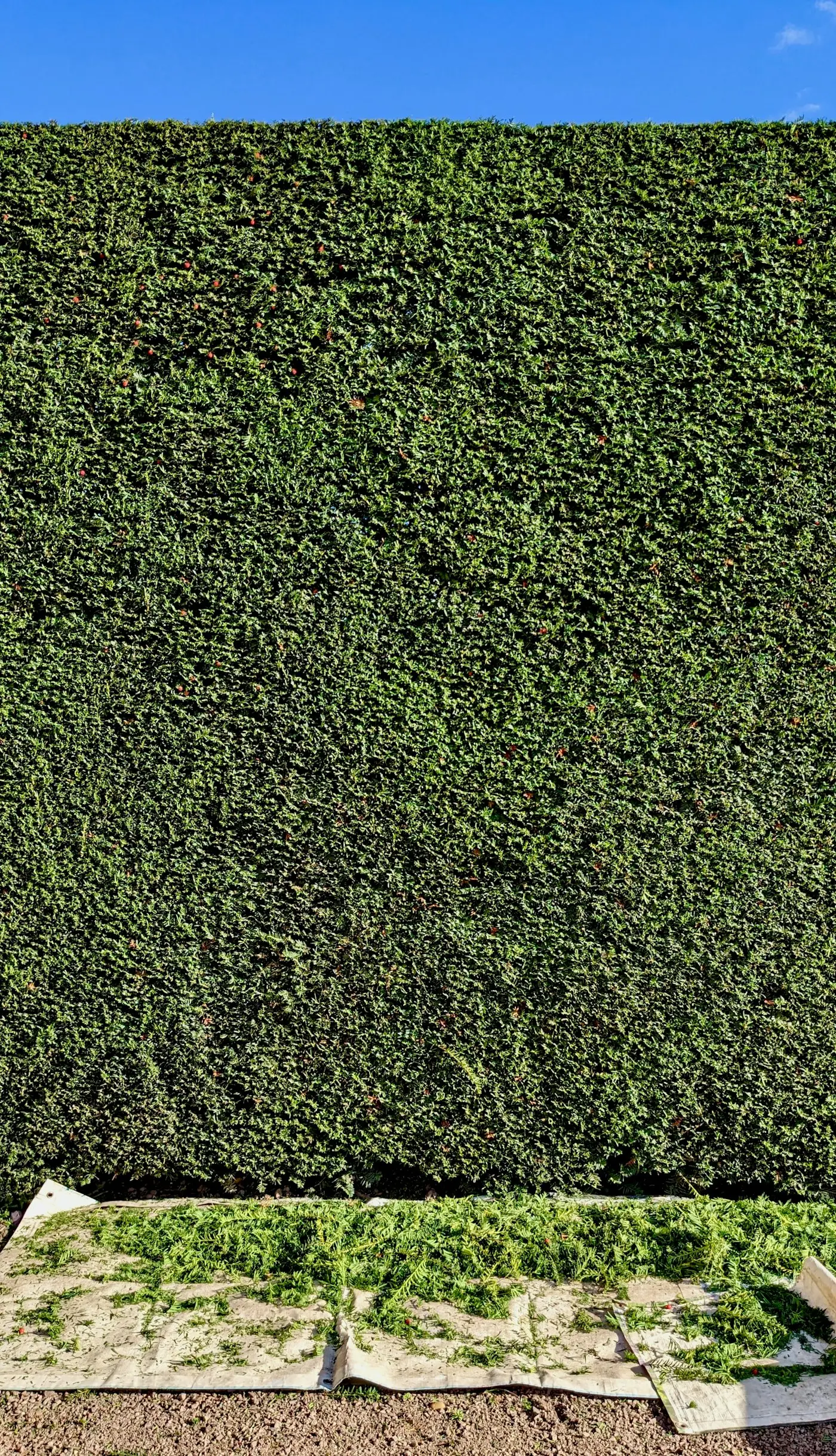
Most Yorkshire gardeners charge £25-33 per hour for hedge cutting work, and most standard domestic hedges take one to three hours. That puts the typical range at £40-120 for a single hedge, which is £10-20 per hour below London and the South East for comparable work. Yorkshire has a high density of experienced gardeners in most postcodes, and that keeps prices competitive.
The range is wide because hedges are not all the same job. A small privet front hedge in Harrogate is a 45-minute job at one price. A leylandii boundary run behind a Bradford terrace with no access from the neighbour's side is a half-day job at a very different price. This guide breaks down where your hedge sits in that range.
The quick answer: Yorkshire hedge cutting costs £40-120 per hedge for most domestic jobs. Small privet runs are at the low end. Tall conifers and long runs are at the high end. Prices are typically £10-20 per hour below the national average.
Yorkshire hedge cutting prices by type and size
| Hedge type | Small (under 3m long) | Medium (3-10m) | Large (10m+) |
|---|---|---|---|
| Low privet (under 1.5m) | £35-50 | £50-90 | £85-160 |
| Tall beech/hornbeam (1.5-3m) | £50-80 | £80-140 | £130-250 |
| Conifer (leylandii etc) | £65-120 | £120-200 | £180-350+ |
| Mixed garden boundary | £45-75 | £70-130 | £120-220 |
These prices assume waste removal is included or quoted separately at £20-40 extra. Always confirm before you agree a number. Anyone transporting green waste commercially needs a Waste Carrier's Licence from the Environment Agency. It is reasonable to ask for it on larger jobs.
What drives the price
Height
This is the biggest single factor. A hedge below 1.5m can be cut standing on the ground. Above 1.5m the gardener needs a step platform or ladder, which slows progress and adds physical risk. Above 2.5m, most domestic hedge trimmers struggle to reach the top cleanly, and the job shifts into heavier territory. For conifers at 3m+ that need serious height reduction, that is a separate job from routine trimming and priced accordingly.
Length
Every extra metre is time. A 5m privet run is a quick morning job; a 30m leylandii boundary is most of a day. Longer runs also generate more waste volume, and that is where disposal costs stack up. A van full of conifer cuttings is a meaningful amount of material that has to go somewhere.
Access difficulty
If the gardener can work both sides of the hedge without restriction, the job flows. If one side backs onto a locked garden, a shared driveway with a parked car, or a steep slope, the job takes longer and the price reflects it. Back-to-back terraced gardens in Leeds and Bradford often have this problem on boundary hedges.
Waste disposal
Many Yorkshire gardeners quote cutting and disposal separately. A standard load of light hedge cuttings is usually £20-30 extra. A conifer run producing several large bags of dense material can add £40-60. Always ask whether disposal is included. A quote that looks cheap often leaves disposal out of the number.
Hedge cutting price per metre: Yorkshire 2026
When gardeners quote per metre rather than per job, the figures below show what to expect in Yorkshire. Per-metre pricing is most common for leylandii and other large conifer hedges where the job scales directly with length.
| Hedge type | Per metre (1 side) | Per metre (both sides) | Typical 10m cost |
|---|---|---|---|
| Privet / Beech / Hawthorn (domestic) | £3-8 | £6-12 | £60-120 |
| Leylandii / Thuja (large conifer) | £8-15 | £14-22 | £140-220 |
| Mixed native hedge | £5-10 | £9-16 | £90-160 |
Per-metre prices assume a single visit with waste disposal quoted separately. Taller hedges above 2.5m push toward the top of each range. Yorkshire rates run 15-20% below the national average for equivalent work, so if you have seen prices quoted online, expect to pay less here.
Yorkshire prices vs national rates
Yorkshire hedge cutting runs £10-20 per hour below London and the South East. Against the national midpoint, Yorkshire is typically 15-20% cheaper for equivalent work. This is not about lower quality. It reflects that self-employed gardeners in Yorkshire have lower overheads, shorter travel times between jobs in dense urban areas, and a competitive local market in most postcodes.
Within Yorkshire, there is some variation. Harrogate and the North Yorkshire market towns sit slightly above the county average; Barnsley, Doncaster, and Rotherham sit slightly below. The gap is around 10-15% between the highest and lowest Yorkshire areas for the same hedge job, which is modest.
One-off trim vs annual maintenance contract
A one-off trim costs more per visit than the equivalent work on an annual contract, for the same reason that any recurring service costs less per session when a gardener has guaranteed return work. The premium for one-off hedge cutting in Yorkshire is typically 15-20% above the contracted rate.
If your hedge needs cutting twice a year, it is worth asking the gardener whether they will agree a fixed annual price for both cuts. This gives you predictability on cost, and most gardeners prefer it because it keeps their schedule full. A twice-yearly contract for a medium beech hedge in Yorkshire might run £140-200 all-in, versus £80-120 per one-off cut.
For full details on hedge trimming services across Yorkshire, see the hedge trimming service page or the broader UK hedge trimming cost guide.
When to cut hedges in Yorkshire
Timing a hedge cut in Yorkshire has two components: what is good for the hedge, and what is legally and ecologically sensible.
Under the Wildlife and Countryside Act 1981, it is an offence to cut a hedge that contains an active bird's nest. The main nesting season runs from April through August, though birds can start nesting earlier in mild springs and some species have late clutches in September. The legal position is straightforward: if a nest is present and being used, the hedge cannot be cut until the birds have finished with it.
The practical cutting windows in Yorkshire are:
- Late May to mid-June: after the first flush of growth has settled. Most early nesters (blackbirds, robins) have fledged, though late nesting species may still be active. A check before cutting is sensible.
- Late August to October: the best window for most hedges. Summer nesting is largely complete, growth has slowed, and there is still enough of the growing season left for the hedge to recover before winter.
Avoid cutting in hard frost periods. Freshly cut stems are more vulnerable to frost damage, particularly in box and formal shaped hedging. North Yorkshire gardens at higher elevation can see hard frosts into mid-April and from October onward, so the autumn window closes a little earlier than in the Vale of York or South Yorkshire.
What is usually included
A standard hedge cutting job covers the top and both accessible sides, raking loose cuttings from the lawn and path beneath the hedge, and basic shaping to maintain the hedge's established form. It does not typically include formal topiary shaping beyond what the hedge already holds, work on sides that require access through a locked neighbour's garden, or stump clearance if a section of the hedge has died and needs removing.
Waste disposal is the most commonly misunderstood extra. Check before agreeing. Some gardeners include a standard load; most charge it separately. For anything over a medium conifer run, the disposal cost is real and meaningful.
Hedge removal vs cutting: when removal is better value
For leylandii and other fast-growing conifers that have been left to get substantially taller and wider than wanted, repeated cutting can become more expensive than a one-off removal. If the hedge is already past 4-5m and you are spending £200+ every year trying to keep it manageable, it is worth getting a removal and replacement quote.
Hedge removal in Yorkshire typically costs £400-900 for a medium run of mature conifers, including stump grinding. That compares to £200-300 per year in ongoing maintenance for the same hedge. Over five years, removal and replacement with a slower-growing species often works out cheaper and permanently solves the problem. See the garden clearance service page for more on hedge removal.
If you are dealing with a neighbour's hedge causing issues, the high hedge complaint process in Yorkshire covers your legal options under the Anti-social Behaviour Act 2003.
Get a quote for your Yorkshire hedge.
60-second assessment. If a local gardener takes your enquiry, they call you with a price for your specific hedge.
Start the assessmentFrequently asked questions
How much does hedge cutting cost in Yorkshire?
Yorkshire hedge cutting typically costs £40-120 for a standard domestic hedge, depending on size, species and access. Small privet hedges under 3m run £35-50. Medium hedges (3-10m) cost £50-140 depending on height. Large hedges over 10m, or tall conifers, can run £130-350+. Yorkshire rates sit £10-20 per hour below London and the South East.
When can you legally cut hedges in Yorkshire?
The Wildlife and Countryside Act 1981 makes it an offence to cut a hedge containing an active bird's nest. The main nesting season is broadly April to August, though checking for nests before any cut is good practice year-round. The safest windows are late May to mid-June and late August to October.
How often should I cut my hedge in Yorkshire?
Most hedges need cutting once or twice a year. Fast-growing species like privet and leylandii benefit from two cuts (late spring and late summer). Beech and hornbeam are fine on one annual cut. Yew and box, if formally shaped, need one careful cut in late summer.
Is it worth doing hedge cutting myself?
For small hedges under 1.5m that you can reach safely, DIY is reasonable if you have a hedge trimmer and a disposal route. For anything taller, longer than 15m, or with access difficulties, a professional is safer and often faster once you factor in disposal time and effort.
How much does cutting a tall conifer hedge cost in Yorkshire?
Tall conifer cutting in Yorkshire costs £120-200 for a medium run (3-10m) and £180-350+ for a large run over 10m. Significant height reduction work is priced separately as a heavier job, often £200-500+ depending on scale and the volume of waste generated.
What legal rules apply to high hedges in Yorkshire?
If a neighbour's hedge is over 2 metres tall and affecting your enjoyment of your property, you can submit a high hedge complaint to your local council under the Anti-social Behaviour Act 2003. Yorkshire councils handle these with a fee of typically £300-700. Direct negotiation is always worth trying first. See our high hedge complaint guide for the full process.
How much does hedge cutting cost per metre in Yorkshire?
Hedge cutting in Yorkshire costs £3-8 per linear metre for a standard domestic hedge trimmed on one side, or £6-12 per metre for both sides. Leylandii and large conifers sit at £8-15 per metre (one side) or £14-22 per metre (both sides). A 10m privet hedge trimmed on both sides typically costs £60-120 all in. These figures assume a professional visit with a hedge trimmer, not topiary shaping or formative restructuring work, which is priced separately.
How long does it take to cut a hedge?
A 10m privet hedge at 1.5m tall takes around 45-90 minutes for a professional to cut both sides, including raking up cuttings. A longer conifer run of 20-30m can take most of a working day. The main variables are hedge height (taller hedges need more time setting up platforms or ladders), density (leylandii produces far more waste volume than beech), and access (one locked side adds significant time). Waste disposal time is separate from cutting time and adds 20-40 minutes for a typical domestic job.
How much does a gardener charge to cut a hedge?
Yorkshire gardeners charge £25-35 per hour for hedge cutting, with most domestic hedge jobs coming in at £40-120 total. Day rates for a solo gardener run £175-300 in Yorkshire, at the lower end of the national range for equivalent work. Some gardeners quote per metre for longer runs, particularly on conifer hedges where the job length is the primary driver. Per-hour quotes suit shorter, more variable jobs; per-metre suits long boundary runs where the gardener can assess rate clearly from the start.
What is the cheapest way to get a hedge cut?
Off-peak booking (October to February) saves money because gardeners have lighter schedules and more flexibility on price. Signing up for a twice-yearly contract rather than one-off cuts typically saves 15-20% per visit. Arranging your own green waste disposal removes the £20-40 disposal charge that most gardeners add. The cheapest long-term approach is keeping the hedge in annual trim: a neglected hedge that has grown beyond its intended shape takes twice as long to cut and carries a price to match. Keeping it at a manageable size every year costs less overall than intermittent heavy cuts.
How often should you cut a hedge?
Formal hedges such as privet, box, and yew need cutting two to three times per year to hold a crisp shape. Fast-growing species like leylandii and laurel benefit from two cuts per year to stay manageable. Informal flowering hedges - hawthorn, blackthorn, mixed native - are fine on one cut per year, ideally in late summer after flowering and fruiting is complete. Slow-growing beech and hornbeam need one careful cut in August or September. The right frequency depends on the species and how formal you want the finish: a garden hedge that looks tidy is different from a formally-clipped box parterre.
Do I need planning permission to cut a hedge in Yorkshire?
You do not normally need planning permission to cut or trim a hedge on your own property in Yorkshire. The main exceptions are hedges subject to a Tree Preservation Order (TPO), hedges within a Conservation Area where a council has applied specific controls, and ancient or veteran hedgerows protected under the Hedgerows Regulations 1997. If your hedge is on a boundary with a public highway, the local authority may have powers to require work if it causes obstruction, but the permission question does not apply to routine trimming on private land. If in doubt, a quick call to your local council planning department takes five minutes and avoids potential enforcement issues. Cutting a neighbour's hedge without their permission is a separate matter from planning and could expose you to a civil claim regardless of any planning position.
How much does leylandii hedge cutting cost?
Leylandii hedge cutting in Yorkshire costs £8-15 per metre for one side or £14-22 per metre for both sides. A 10m leylandii run costs £140-220 to cut on both sides. The price is higher than privet or beech because leylandii produces a large volume of waste and the branches are dense and heavy. Tall leylandii over 4m often requires a professional hedge trimmer on an extended reach platform and is priced at the top of the range. Height reduction on overgrown leylandii is a different and heavier job than routine trimming: expect £200-500 for a medium run, depending on how far it has been allowed to grow. Note that leylandii cannot be cut back into old brown wood - once you remove growth beyond where there are still green shoots, the bare brown section will not regenerate, which limits how aggressively height can be reduced in a single visit.
What is the best time of year to cut a hedge in Yorkshire?
Late August to early October is the best window for most Yorkshire hedges. Summer nesting is largely complete, growth has slowed, and there is still enough of the growing season for the hedge to recover before the first frosts. A second cut in late May to mid-June suits fast-growing species like privet and leylandii. Avoid March to July for any hedge that could contain nesting birds: cutting an active nest is an offence under the Wildlife and Countryside Act 1981, regardless of whether you can see a nest from the outside. In North Yorkshire at higher elevation, be aware that hard frosts can arrive in October and freshly cut stems are more vulnerable, so the autumn window closes a little earlier than in the Vale of York or South Yorkshire lowlands.
How much does it cost to have a large hedge removed?
Hedge removal in Yorkshire starts at £200-500 for a 10m run of domestic hedging at a manageable height. Mature conifers including stump grinding cost £400-900 or more for the same length, reflecting the volume of waste and the machine time required. The cost varies significantly with species (leylandii generates more waste than hawthorn), height, and access. Disposal of the resulting waste is the biggest variable on a large removal: a full van of conifer cuttings is a serious load. For leylandii that has grown past 4-5m and is costing £200+ per year in maintenance, removal and replacement with a slower-growing species often works out cheaper over five years and permanently solves the management problem. Our garden clearance service covers hedge removal and can quote alongside any maintenance work.
Can I get a quote for hedge cutting in Yorkshire?
Most Yorkshire gardeners will quote from a site visit or from photos and measurements you provide. To get an accurate price quickly, measure your hedge: length in metres, approximate height, and note whether both sides are accessible. Include a photo if the hedge is unusually tall, dense, or difficult to access on one side. Prices vary by area, hedge type, and time of year. Use the quote form on this site to be connected with an available local gardener. We check availability before passing your details, so you will hear from someone who can actually take the job.
How much does hedge cutting near me cost in Yorkshire?
Hedge cutting prices across Yorkshire run from £35 for a short privet front hedge to £350+ for a large conifer boundary run. In cities including Leeds, Sheffield, Bradford, and York, the density of local gardeners keeps rates competitive: expect £40-120 for a standard domestic hedge. In rural North Yorkshire and in market towns like Harrogate, Skipton, and Beverley, travel time between jobs means prices can run 5-10% higher for properties outside urban centres.
The quickest way to get an accurate price is to measure your hedge - length in metres, approximate height, and species if you know it - and request quotes from two or three local gardeners. Most Yorkshire gardeners will give a firm price from photos and measurements without needing a site visit for standard hedges at domestic heights. For anything taller than 2.5m, a brief site visit before quoting is reasonable.
Yorkshire rates remain well below the national average: typically £10-20 per hour below London and the South East, and 15-20% below the national midpoint for equivalent work. The gap is not about quality - it reflects lower overheads, shorter travel times in dense urban areas, and a competitive local market in most Yorkshire postcodes. Use the quote form on this site to be connected with an available local gardener who can give you a specific price for your hedge rather than a range.
How much does privet hedge cutting cost in Yorkshire?
Privet is the most common hedging plant on Yorkshire terraced streets and one of the cheapest domestic hedges to maintain. For a privet hedge at standard height (1-1.8m), cutting costs £3.50-7 per linear metre in Yorkshire. A 10m privet hedge cut both sides costs £60-120, including collecting and loading the cuttings. A small front garden privet run of 3-5m costs £35-60 as a one-off job.
Privet grows fast. Most Yorkshire privet hedges genuinely need two cuts per year to stay tidy: once in late May to early June (after the first flush of new growth) and again in late August or September (the main annual cut). A gardener who quotes for a once-yearly cut on privet is giving you the minimum, but the hedge will look ragged by mid-summer. Two cuts per year under a contract typically costs less per visit than two separate one-off bookings.
Privet cuts cleanly with a standard electric or petrol hedge trimmer. The cuttings are light and compact, making waste disposal simpler and cheaper than conifer or laurel. This is why privet sits at the lower end of the per-metre price range: the job goes faster and the waste is easier to handle. If your privet hedge has been left for two or more seasons without cutting, expect a first-visit premium of 20-30% over the standard rate to deal with the extra bulk and overhang.
How much does beech hedge cutting cost in Yorkshire?
Beech hedge cutting in Yorkshire costs £5-10 per linear metre at standard domestic heights of 1.2-2m. A 10m beech hedge trimmed on both sides typically costs £80-140 in Yorkshire, with waste disposal included or quoted at £20-35 extra. Beech produces moderate volumes of cuttings - more than privet but significantly less than leylandii - and the leaf debris bags up cleanly.
One of the practical advantages of beech over faster-growing species is that it genuinely needs only one cut per year, in late August or early September. This makes the annual maintenance cost for a beech hedge lower than privet or leylandii of equivalent length, even if the per-visit rate is similar. A 10m beech hedge cut once a year in Yorkshire costs £80-140 per year all-in, versus £120-240 per year for privet needing two cuts to stay tidy.
Beech performs best on well-drained soils - chalk, limestone, sandy loam. In Yorkshire, this means beech suits the East Riding, the Vale of York, and the limestone belt through the Dales and Wolds particularly well. In the heavier clay soils of West Yorkshire and South Yorkshire, hornbeam is often a better choice: it grows more vigorously in wet, heavy ground and tolerates the waterlogging that can stress beech. Both species need the same single annual cut in late summer and cost roughly the same per metre to maintain. For full species pricing, see our hedge trimming service page.
How much does laurel hedge cutting cost in Yorkshire?
Laurel hedge cutting in Yorkshire costs £5-12 per linear metre at standard heights, sitting above privet and beech on the per-metre price scale. The higher cost reflects the way laurel needs to be cut: the large, glossy leaves brown badly when sliced by hedge trimmer blades, so a clean finish requires powered shears or secateurs rather than a standard electric trimmer. This slows the job compared to privet or beech at the same running length.
Common laurel (Prunus laurocerasus) is a vigorous grower in Yorkshire conditions, particularly in sheltered gardens with reasonable moisture. Most laurel hedges need two cuts per year to stay presentable: once in late spring and again in early September. A 10m laurel hedge at 1.5-2m height costs £80-180 in Yorkshire depending on how it is cut and the finish required. If a gardener quotes for laurel at privet rates, ask how they approach the leaf-blade problem: a quick run with a hedge trimmer will look ragged within days as the cut edges brown.
Cherry laurel, the most common variety in domestic Yorkshire gardens, can grow 45-60cm per year in good conditions - faster than beech but slightly slower than privet. On large laurel hedges (over 15m) or those that have been left for several seasons, a day rate quote is more practical than a per-metre price: a well-established large laurel run can take a full working day for two people to cut cleanly. Always confirm whether disposal is included - a full van load of large laurel leaves is a meaningful amount of material.
What is the difference between hedge cutting and hedge trimming?
Hedge cutting and hedge trimming are used interchangeably by most homeowners, but professionals use them to describe different levels of work - and the distinction matters when comparing quotes.
Hedge trimming is maintenance: keeping an established hedge at its current size and shape using a powered hedge trimmer. It is the recurring annual or twice-yearly task for most domestic hedges. A trimming quote assumes the hedge is already at its intended size and the job is to maintain the form, not change it. Most hedges in good annual trim take 30-90 minutes per 10m run for a professional to cut and tidy up after.
Hedge cutting (sometimes called cutting back, reduction, or formative cutting) is more aggressive: reducing the overall height or width, often significantly. This might mean bringing a leylandii boundary from 3m down to 2m, narrowing an overgrown privet that has spread beyond the boundary, or reshaping a beech hedge that has grown uneven on one side. This work uses heavier machinery, takes longer, and generates considerably more waste than a maintenance trim.
When requesting quotes in Yorkshire, be explicit: if you want the hedge cut back in size, say so and give current and target dimensions. A gardener quoting for trimming will not automatically price for a height reduction. The two jobs can cost very different amounts - a 10m privet hedge trimmed for maintenance might cost £60-90, while reducing the same hedge by 40cm in height could cost £120-180 because of the additional material and time involved.
How much does an annual hedge cutting contract cost in Yorkshire?
An annual hedge cutting contract in Yorkshire covers a set number of visits per year at a fixed price, agreed in advance with a local gardener. Most contracts cover two visits per year - late spring and late summer - which is the right frequency for fast-growing species like privet and leylandii. For slower-growing beech, yew, or box, a single-visit annual contract is standard.
The main financial advantage of a contract is the per-visit saving compared to one-off bookings. Yorkshire gardeners typically price contracted work 15-20% below the equivalent one-off rate because the return work is guaranteed and keeps their schedule predictable. For a 10m privet hedge, a twice-yearly contract in Yorkshire might cost £140-200 per year, versus £70-120 per one-off visit booked separately. For fast-growing species that genuinely need two cuts, a contract is the straightforward financial choice.
A contract also protects against price increases in peak season. Summer hedge cutting bookings in Yorkshire (August and September) fill quickly and some gardeners add a seasonal premium for new one-off jobs. A contracted rate agreed at the start of the year locks in the price for both visits. Most Yorkshire gardeners are straightforward about this: a simple verbal agreement for two visits at a fixed price is normal, though a written quote covering both dates is worth asking for on hedges over 20m or where access arrangements are complicated.
How much cheaper is DIY hedge cutting than hiring a professional in Yorkshire?
For a small, low hedge that you can reach safely from the ground, DIY hedge cutting can save £30-70 per session compared to a professional. The maths shifts quickly as height and length increase.
Equipment costs matter most. A decent electric hedge trimmer costs £60-120 to buy. A petrol hedge trimmer for longer or taller work costs £150-250. You will also need a ladder or step platform for anything above 1.5m (£40-100), safety glasses, and a way to dispose of the cuttings. On a 10m privet hedge, a professional cutting both sides and removing the waste might charge £70-100. Over three sessions (two years of twice-yearly cutting), the professional costs £210-300. The same three sessions DIY: tool purchase £120, ladder £50, disposal trips (your time and tip fees) £30-50, total roughly £200-220 with the tools paid off. The DIY saving is modest once disposal is factored in and disappears entirely on larger hedges.
For anything taller than 1.5m, a leylandii run, or any hedge where access requires working at height, the case for professional work becomes much stronger on safety grounds alone. A professional with a long-arm hedge trimmer and a proper work platform can cut a 2.5m conifer boundary in two hours safely. The same job as a homeowner with a domestic trimmer and a domestic ladder carries a meaningful injury risk that is worth accounting for in the cost comparison.
The honest comparison: DIY makes sense for hedges under 1.5m that you can reach safely, under 10m in length, and where you already own or can borrow the right tools. Above that threshold, the saving is small relative to the time, risk, and disposal effort involved.
How much does a small garden hedge cost to cut in Yorkshire?
A small garden hedge in Yorkshire - a front privet or mixed hedge under 5 metres long and under 1.5m tall - typically costs £35-65 to cut as a one-off job, including collecting the cuttings. This is the most common hedge job in the terraced streets of Leeds, Bradford, Sheffield, and Hull, and most local gardeners can complete it in under an hour.
The price range for small hedge jobs is narrower than for larger hedges because there are fewer variables. Height is the biggest one: a privet at 1.2m costs less than the same hedge at 1.8m because the taller hedge requires a step platform and slightly more care on the top cut. Access is the other main variable: if the hedge fronts a public pavement, the gardener can work easily from both sides; if one side has restricted access, the job takes a little longer and the price reflects it accordingly.
Waste disposal on small hedge jobs is usually included or priced at a flat £10-20 extra. The volume of cuttings from a 3-5m privet hedge is modest - typically one or two black bin bags - and most gardeners fold this into the job price rather than charging separately. This is one situation where asking about disposal up front rarely changes the quote for small jobs.
For a small garden hedge that looks manageable from the outside, many Yorkshire gardeners will give a firm quote from a photo sent without needing a site visit. This is the quickest route to a price: measure the hedge (pace it out along the base, estimate the height), take a photo, and contact two local gardeners with those numbers. Most will respond within a day and can confirm a fixed price before arriving.
Related articles
- Hedge trimming service across Yorkshire
- High hedge complaints in Yorkshire: your legal options
- Garden clearance including hedge removal
- Garden maintenance cost guide 2026
- Tree surgeons in Yorkshire: when hedge work becomes tree work
- UK hedge trimming cost guide 2026
Gardeners in your area
We cover the whole of Yorkshire. Click through to your town for local pricing and availability: