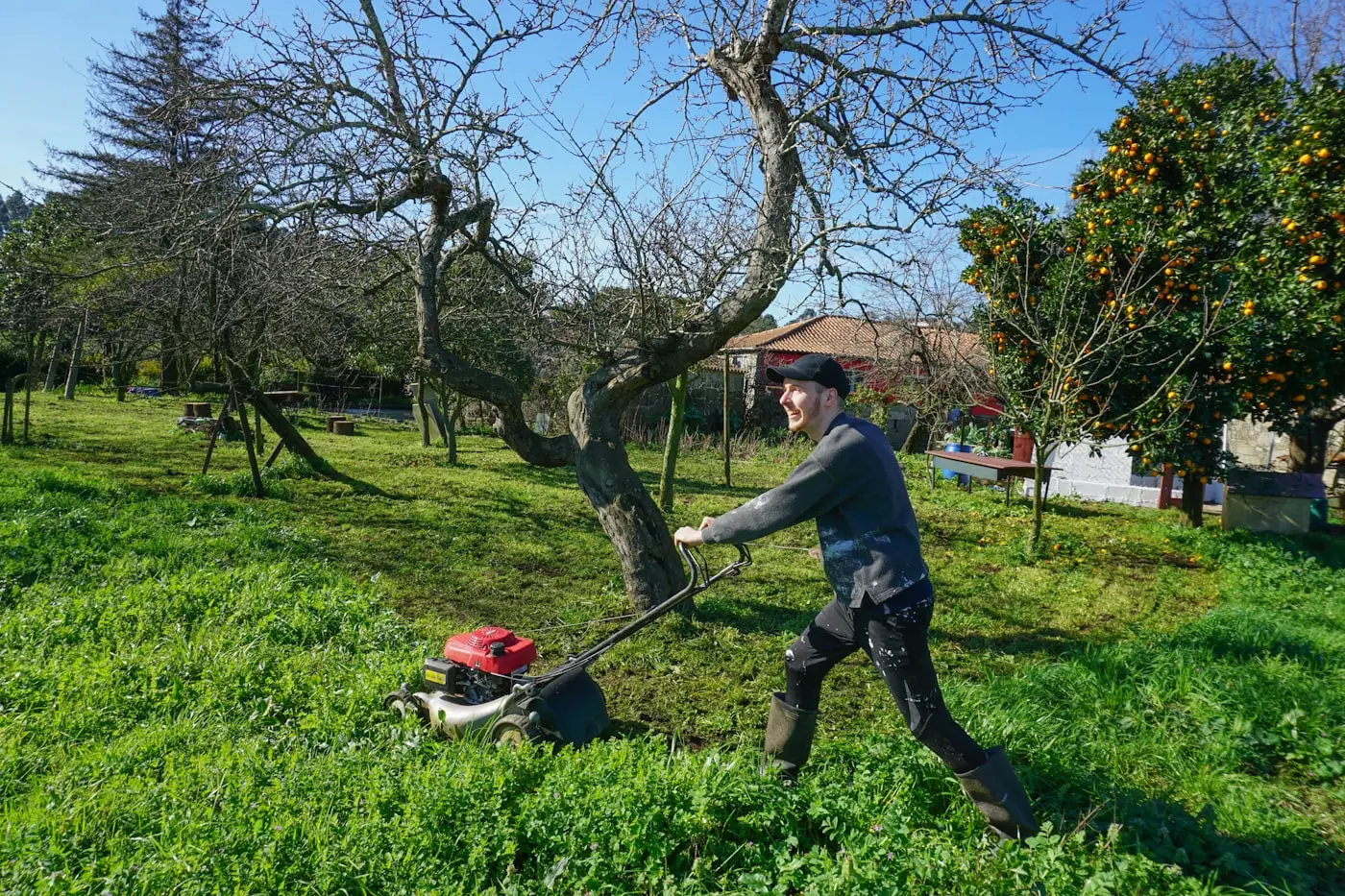
Lawn mowing services in Yorkshire cost £25-60 per cut for a standard domestic lawn in 2026. Most gardeners charge by lawn size: small town lawns (up to 30m2) run £25-35, medium suburban lawns (30-80m2) cost £35-45, and larger lawns over 80m2 cost £45-75+. Regular fortnightly cutting is cheaper per visit than occasional one-off cuts throughout the growing season.
A lawn mowing service in Yorkshire connects you with a local gardener who cuts your grass on a regular schedule, so your lawn stays neat without lifting a finger. Choosing a local operator over a national platform means consistent results, flexible scheduling, and a gardener who knows your garden and your postcode. This guide covers 2026 prices across all lawn sizes, what a professional mowing service includes, how often to cut through the Yorkshire season, and how to choose the right operator for your garden.
How much does lawn mowing cost in Yorkshire?
A lawn mowing service in Yorkshire costs from £25 for a small garden to £75+ for a large plot. The table below shows typical 2026 prices by lawn size for both one-off and regular fortnightly visits.
| Lawn Size | Per Visit Cost | Monthly (fortnightly) | Annual estimate |
|---|---|---|---|
| Small (up to 30m2) | £25-35 | £50-70 | £500-700 |
| Medium (30-80m2) | £30-45 | £60-90 | £600-900 |
| Large (80-200m2) | £45-75 | £90-150 | £900-1,500 |
| Very large (200m2+) | £65-100+ | £130-200+ | £1,300-2,000+ |
Regular fortnightly contracts save you 10-20% per visit compared to one-off rates. All prices include mowing, edging, and clipping collection. Request a gardener in 60 seconds for your specific garden.
What Is a Lawn Mowing Service?
A lawn mowing service sends a local gardener to cut your grass on a regular schedule, leaving your lawn tidy without you having to lift a finger. Rather than owning and maintaining your own mower, you pay a professional to arrive on a set day, cut the lawn to the right height for the season, edge the borders, and clear the clippings. Most Yorkshire homeowners book fortnightly visits through the growing season and reduce to monthly or none over winter.
A good mowing service is more than just running a machine across the grass. An experienced operator reads the lawn on every visit: adjusting cut height based on growth rate, flagging bare patches or moss before they spread, and checking the edges stay clean. The difference between a rushed cash-in-hand cut and a professional regular visit shows clearly within a season.
What Are the Current Lawn Mowing Prices in Yorkshire?
Most Yorkshire lawn mowing services charge £25-75+ for a standard garden depending on size, or from £25/visit on a fortnightly contract. Prices vary by lawn size, access, and whether you book one-off or on a regular schedule. The table below covers current typical rates for 2026.
| Garden size | Approximate area | One-off price | Regular fortnightly |
|---|---|---|---|
| Small | Up to 30 sqm | £25-£35 | From £25/visit |
| Medium | 30-80 sqm | £30-£45 | From £30/visit |
| Large | 80-200 sqm | £45-£75 | From £45/visit |
| Extra large | 200 sqm+ | £65-£100+ | From £65/visit |
Customers on a regular fortnightly contract typically save 10-20% compared to one-off rates, as the operator can plan their route and schedule more efficiently. Prices include a standard mow, edging along paths and borders, and collection or dispersal of clippings. Waste removal beyond the garden, specialist striped cuts, and additional services like scarification or aeration are charged separately.
Yorkshire sits in the mid-range for UK lawn mowing prices: cheaper than the South East and broadly comparable with the North West. Rural North Yorkshire may run slightly higher due to travel time and fewer operators per square mile.
What's Included in a Lawn Mowing Service?
A standard lawn mowing service includes: cutting to your preferred height, edging the borders, and clearing grass clippings. The full scope of a professional visit covers more than many homeowners expect:
- Mowing to an appropriate height for the season: shorter in dry summer conditions, higher in spring and autumn to protect root development
- Edging along borders, path edges, and patio margins using a half-moon edger or rotary edger for crisp lines
- Clipping collection or mulching: most operators collect clippings; some offer mulching as an option which returns nutrients to the soil
- Sweeping down hard surfaces including paths, patios and driveways that adjoin the lawn
- Assessment: a professional operator will flag obvious lawn problems (bare patches, moss, compaction, disease) as part of the visit, even if treatment is a separate job
What a standard mowing visit does not include: lawn treatments (fertiliser, weedkiller, moss control), aeration or scarification, overseeding, or any work beyond the lawn itself. Our lawn mowing service page and grass cutting service page cover the full scope of what is and is not included.
How Often Should I Have My Lawn Mowed?
Most Yorkshire lawns need mowing every 1-2 weeks from April to October, dropping to monthly or as-needed from November to March. Grass growth in Yorkshire is heavily seasonal: the growing season runs roughly April through October, with peak growth in May, June and July when warm temperatures and good rainfall combine to push lawns on fast.
April to May: getting started
The first cuts of the year should be set high, at 5-6cm. Cutting a lawn that has overwintered too short causes stress and opens the turf to moss and weed invasion. Bring the height down gradually over the first few visits. Fortnightly visits are typically sufficient through April; weekly or fortnightly from mid-May as growth picks up.
June to July: peak growing season
This is when Yorkshire lawns grow fastest. A ryegrass lawn can add 3-4cm a week in June with the right conditions. Most gardeners recommend weekly or fortnightly cuts during this window depending on grass type and how pristine you want the result. Fortnightly works for most family gardens; weekly is better for lawns where appearance is a priority.
August to October: slowing down
Growth slows from August as temperatures drop and daylight shortens. Fortnightly cuts work well through August and September. By October, monthly visits are usually sufficient. Raise the cut height slightly in autumn to help the grass go into winter with more leaf area and stronger roots.
November to March: winter
Most operators stop regular mowing over winter. If the lawn stays green in a mild spell, a light cut on a dry day can help appearance, but cutting wet or frosted grass damages the turf. Most contracts pause or move to a monthly check-in rather than scheduled mowing.
The one-third rule
Never remove more than one-third of the grass blade in a single cut. Cutting too much at once stresses the plant, causes yellowing, and makes the lawn more vulnerable to dry spells. If a lawn has been left too long, bring it down over two or three visits rather than scalping it in one go.
What Affects the Price of a Lawn Mowing Service?
Lawn size is the main driver, but shape complexity, access difficulty, slope, clipping disposal, booking frequency, and current condition all affect the final price. Regular customers typically pay 10-20% less per visit than one-off bookings.
Beyond lawn size, several factors push prices up or down. Understanding these helps you compare quotes accurately and avoid surprises.
- Lawn shape and complexity: a simple rectangular lawn is faster to mow than one with island beds, tight corners, or irregular edges. More complexity means more time.
- Access: if the gardener has to carry equipment through the house, down a narrow side passage, or across sloped ground, expect a small premium.
- Slopes: steep or undulating lawns take longer and are harder on equipment. A flat garden of 50 sqm takes less time than a sloped one of the same area.
- Clipping disposal: most operators include clipping collection in the price. Some charge extra if the volume is large or if they have to take clippings away rather than leaving them for your brown bin.
- Frequency: regular customers almost always pay less per visit than one-off bookings. The operator saves time on admin, routing, and quoting.
- Condition: the first cut on an overgrown or neglected lawn costs more: multiple passes, higher clipping volume, and a longer visit overall. Budget 50-100% extra for a clearance cut.
- Location: urban Yorkshire (Leeds, Bradford, Sheffield) tends to be more competitive in price than rural North Yorkshire, where fewer operators means less price pressure.
Can I Get a One-Off Lawn Mowing Service?
Yes: most local gardeners offer one-off cuts as well as regular contracts; expect to pay a slight premium for a single visit. One-off bookings are common for homeowners returning from holiday, preparing for a garden party, or wanting to try a gardener before committing to a contract. Most Yorkshire operators are happy to take them on, though availability may be tighter at peak times in summer.
If the lawn has been neglected, a one-off clearance cut will cost more than a standard maintenance visit. The gardener may need to make multiple passes at progressively lower heights, and the clipping volume will be much higher. Always mention the current state of the lawn when getting a quote for a one-off visit so the price is realistic from the start.
Is It Better to Use a Local Lawn Mowing Service or DIY?
For most homeowners, a local mowing service saves time and delivers a better result than DIY, especially for larger lawns or those with slopes. The maths are straightforward: a professional with a commercial walk-behind mower covers a typical family garden in 20-40 minutes including edging and tidy-up. The same job with a domestic mower takes 45-90 minutes, plus setup, cleanup, and putting everything away.
At £25-50 per visit, a fortnightly mowing service through the 7-month growing season costs roughly £280-700 per year for a medium-sized lawn. Set against 15-20 hours of your own time across the same period, most homeowners find the value is clear, particularly if the lawn has any slopes, complex edging, or areas that need careful handling.
DIY makes more sense when you enjoy gardening, have a very small lawn, or have already invested in good equipment. For everyone else, a local professional delivers a consistently better result with no effort on your part.
Which Areas of Yorkshire Have Lawn Mowing Services?
Lawn mowing services cover the whole of Yorkshire, including all major towns and most rural areas. Leeds, York, Sheffield, and Bradford have the highest operator density and most competitive prices.
Lawn mowing services are available across the whole of Yorkshire, though coverage varies by operator. The major urban areas (Leeds, York, Sheffield, Bradford) have the highest density of operators and the most competitive prices. Rural North Yorkshire is well covered but with fewer operators per square mile, which can mean slightly less availability at short notice.
What Type of Mower Will the Gardener Use?
Most professional Yorkshire gardeners use commercial petrol or battery-powered rotary mowers. Cylinder mowers are available on request for a fine-cut striped finish on prestige lawns.
The type of mower affects the quality of finish and is worth asking about when you get quotes. Most professional operators in Yorkshire use rotary mowers: petrol or battery-powered walk-behind machines that are fast, reliable, and suited to a wide range of grass conditions.
Rotary mowers
The workhorse of the industry. A rotary mower spins a horizontal blade at high speed to cut the grass. Good for most domestic lawn types, copes well with longer grass between visits, and is what the majority of Yorkshire gardeners use for regular maintenance work.
Cylinder mowers
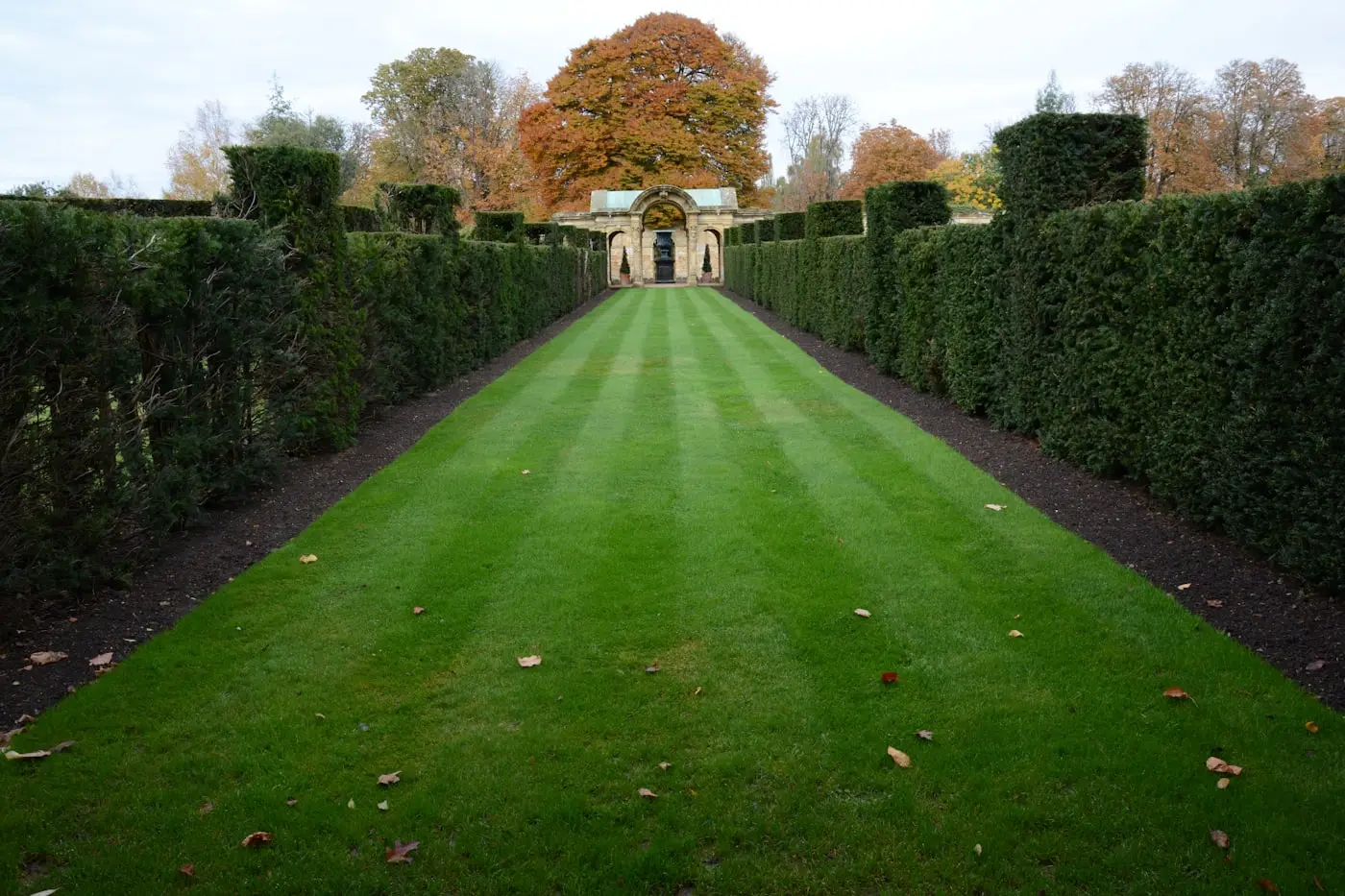
Cylinder mowers cut with a reel-and-bedknife action rather than a spinning blade, giving the finest finish and creating the classic striped effect. They are used mainly on bowling-green-style lawns and prestige domestic gardens. Not every operator offers cylinder mowing; it requires more skill and machine maintenance. Ask specifically if you want a fine-cut cylinder finish.
Ride-on mowers
For very large lawns (over 500 sqm), some operators use compact ride-on or zero-turn mowers. These are faster on large areas but less suited to tight corners or complex shapes. If you have an estate-sized garden, confirm the operator has appropriate equipment before booking.
Robotic mowers
Robotic mowers are a growing alternative for homeowners who want a constantly neat lawn without human visits. They work best on simple, flat lawn shapes and require a one-off installation of a perimeter wire. Upfront cost is £400-2,500+ for the unit and installation, but ongoing running cost is minimal. They are not a replacement for professional mowing on complex, large, or high-specification lawns.
What Should I Expect When Booking a First Cut on an Overgrown Lawn?
If the lawn has been neglected, the first mowing visit will take significantly longer and cost more than an ongoing maintenance visit. Do not be surprised if an operator quotes 1.5-2 times the regular price for the initial clearance cut on an overgrown lawn.
The reason is simple: cutting long grass takes multiple passes at progressively lower heights, produces a large volume of clippings to handle, and often reveals underlying problems (bare patches, moss, drainage issues) that a well-maintained lawn would not have. Budget accordingly and treat the first visit as a one-off, with regular pricing from the second visit onwards.
For lawns that have become seriously degraded (thick moss, bare soil, poor drainage) the solution may be a full lawn care programme involving aeration, scarification, and overseeding before regular mowing makes sense. Getting a lawn assessment before booking ongoing mowing on a problem lawn is time well spent.
How to Choose a Lawn Mowing Service in Yorkshire
Look for public liability insurance, clear scheduling policies, commercial-grade equipment, and a written quote before committing. Ask to see a reference from a local job and confirm edging is included.
The lawn mowing market is fragmented. At one end: dedicated, professional garden service businesses with commercial equipment, proper insurance, and consistent scheduling. At the other: cash-in-hand part-timers with a domestic mower and no insurance. The gap in results and reliability is significant. Here is how to tell them apart.
Look for public liability insurance
Any professional operating in your garden should carry public liability insurance (minimum £1-2m cover). This protects you if they damage property or cause injury. Do not assume coverage: ask before committing. A professional operator will not baulk at the question.
Ask how they handle scheduling and missed visits
Regular lawn mowing lives or dies on consistency. Ask what happens when a scheduled visit needs to move due to bad weather, illness, or equipment problems. A professional operator will have a clear answer. Consistency of cut matters for lawn health: irregular mowing disrupts the grass plant's growth cycle and leads to uneven results.
Check what equipment they use
Commercial-grade mowers produce a cleaner cut and are less likely to tear or bruise the grass than domestic mowers. Ask whether equipment is regularly serviced and blades kept sharp. Blunt mower blades shred rather than cut grass, leaving a ragged white finish that turns brown at the tips and makes the lawn look scorched.
Get a written quote or agreement
A professional operator should be able to provide a written quote covering: price per visit, frequency, what is included and excluded, and how they handle cancellations. If the quote is verbal only, follow up with a message summarising what you agreed. This protects both parties and establishes a clear scope before work begins.
What Grass Cutting Height Should I Request in Yorkshire?
For most Yorkshire lawns: 3-4cm in summer, 5-6cm in spring and autumn, and never below 2cm. Taller grass resists drought and out-competes weeds; scalping the lawn is the single most common cause of summer browning.
Cut height is one of the biggest variables in lawn care and one most homeowners pay no attention to until the lawn looks wrong. As a general guide for Yorkshire lawns:
- Spring (March-April): start at 5-6cm, gradually reduce to 3-4cm as growth picks up
- Summer (May-August): 3-4cm for most lawns; 2-3cm for fine ornamental lawns with good drainage; never below 2cm
- Late summer dry spells: raise the cut to 4-5cm during prolonged dry periods to protect the grass plant and reduce stress
- Autumn (September-October): gradually raise back to 4-5cm to help the grass build reserves before winter
- Winter: avoid cutting if possible; if needed, set at 5-6cm minimum and only cut on dry, unfrozen ground
A professional operator will adjust the cut height with each visit based on current conditions. If you have a preference, note it when booking: most gardeners are happy to work to a specified height as long as it is appropriate for the time of year.
Lawn Mowing vs Full Garden Maintenance: Which Do You Need?
Lawn mowing handles the grass only. If your garden includes borders, hedges, shrubs, and paved areas that also need regular attention, a broader garden maintenance service is likely a better fit. Maintenance visits cover the lawn plus weeding, basic pruning, patio sweeping, and seasonal tidy-ups.
The cost difference is not as large as most people expect. A garden maintenance visit covering both the lawn and borders typically runs 20-40% more than a mowing-only visit, but removes the need to organise separate contractors for different tasks. For most homeowners with a mixed garden, full maintenance is the better-value option. See our guide to garden maintenance cost UK for a full breakdown.
When Should I Book a Lawn Mowing Service in Yorkshire?
The right time to book depends on the season: Yorkshire's growing season runs April to October, with peak demand in May and June.
Spring (March-April): the first cut
March and April mark the return of active grass growth after winter dormancy. The first cut of the season is often the most important: it removes dead tips, encourages lateral growth, and sets the lawn up for the season. If the lawn was not cut in autumn, a spring scarification may be worth booking first. Most gardeners take on new contracts from late March.
Summer (May-September): peak mowing season
This is the core mowing window. Fortnightly visits are the most common frequency for Yorkshire homeowners in summer, with some opting for weekly cuts during the peak growth weeks in May, June and July. Demand for gardeners is highest in summer, so booking ahead or securing a regular contract before the season starts is worthwhile. Last-minute one-off bookings in June and July may have limited availability.
Autumn (October-November): the last cuts
Growth slows significantly from October. One or two final cuts through October and into early November are enough for most lawns. Autumn is also the best time to book lawn aeration and scarification to prepare the turf for winter. Leaf clearance alongside the final mow is a common add-on in October and November.
Winter (December-February): dormant period
Most Yorkshire lawns do not need mowing over winter. Grass growth slows to near-zero in cold conditions, and cutting wet or frosted grass does more harm than good. Most regular contracts pause or reduce to a monthly welfare check. If you want to maintain a contract through winter, discuss winter rates with your gardener: many offer reduced pricing for light-touch visits.
Do I Need to Be Home When the Gardener Comes?
No. Most lawn mowing services operate without the homeowner needing to be present. You agree access arrangements upfront and the gardener lets themselves into the garden.
The standard approach: leave a side gate unlocked, provide a key for a padlock, or agree a code for a combination lock. Payment is typically set up as a standing order or bank transfer, so there is no need for cash handovers on the day. Your gardener will message you after each visit to confirm the work is done and flag anything that needs your attention.
If you prefer to be home for the first visit to walk through the garden and discuss preferences, that is always welcome. After the initial visit, most customers prefer the hands-off arrangement.
What's the Difference Between Lawn Mowing and Lawn Care?
Lawn mowing is the regular cutting of grass; lawn care is a broader set of treatments that improve the health and quality of the turf itself.
Mowing maintains height and appearance on a schedule: typically fortnightly from April to October. It does not fix underlying problems like compaction, thatch buildup, bare patches, or nutrient deficiencies.
Lawn care covers the treatments that do address those problems: aeration to relieve compaction, scarification to remove dead thatch, overseeding to fill thin or bare patches, and lawn treatment and feeding to restore colour and density. Most homeowners benefit from regular mowing plus one or two seasonal lawn care treatments per year.
See also: how much does a gardener cost in the UK for a broader look at garden service pricing.
Is It Better to Pay Per Visit or a Monthly Retainer?
For most Yorkshire homeowners, a per-visit fortnightly contract gives the best combination of flexibility and value. It is cheaper per visit than one-off bookings, requires no upfront commitment, and can be paused over winter.
A monthly retainer (where you pay a fixed fee regardless of visit frequency) suits households that want a predictable bill and are happy for the gardener to use their own judgment on when to visit. It works well for regular, well-established lawns where the gardener knows the property and can manage the schedule independently.
Per-visit pricing gives you more control but requires more communication about scheduling. Retainer pricing offloads that to the professional. Both models are common in Yorkshire; the right choice depends on how hands-on you want to be.
How Do I Get the Best Results from My Lawn Mowing Service?
Clear the lawn before each visit, agree access arrangements upfront, and give early feedback if the first visit is not quite right. A consistent relationship with one gardener delivers better results than switching regularly.
A few practical points that make the relationship with your mowing operator work better:
- Clear the lawn before the visit: garden furniture, children's toys, hoses, and ornaments all slow down the mow and create handling time that tends to creep into pricing over time
- Leave the gate unlocked: most operators work without the householder needing to be home. Agree access arrangements upfront so the visit can proceed regardless of whether you are in
- Tell the operator about changes: if you have had work done, changed the garden layout, or want the cut height adjusted for summer heat, let them know before the visit rather than after
- Pay promptly: most local gardeners are sole traders for whom cash flow matters. Prompt payment keeps the relationship professional and simple
- Give feedback early: if the first visit is not quite right, say so then rather than letting it build. A good operator will want to know and adjust
Find a lawn mowing service near you
Tell us your postcode and garden size. We will check local availability for the right gardener.
Get a free quoteLawn Mowing Service Yorkshire: Frequently Asked Questions
What does a lawn mowing service cost in Yorkshire?
£25-75 per visit depending on lawn size; fortnightly contracts typically cost 10-20% less than one-off cuts. Small lawns (up to 30 sqm) start from £25-35; medium lawns (30-80 sqm) run £30-45; large lawns (80-200 sqm) cost £45-75; very large lawns (200 sqm+) start from £65.
How often should my lawn be mowed?
Every 1-2 weeks April-October; monthly or less November-March. During the peak growing season (May to July) some Yorkshire lawns may benefit from weekly cuts. Growth slows significantly from August onwards and most contracts move to monthly visits over winter.
Do lawn mowing services include edging?
Most do. A good local gardener will edge the borders as part of a standard mow, using a half-moon edger or rotary edger to keep path and border lines crisp. Confirm edging is included when booking, as a small number of operators price it separately.
Can I get a one-off lawn mowing service?
Yes, most Yorkshire gardeners take one-off jobs. Expect a small premium of around 10-20% compared to regular contract customers. If the lawn is overgrown, the first cut may cost 50-100% more than a standard maintenance visit.
What is included in a grass cutting service?
A standard grass cutting service includes: mowing the lawn to an appropriate height, edging along paths and border edges, collecting and disposing of clippings, and sweeping hard surfaces of any clippings. It does not typically include scarification, aeration, overseeding, or treatment: those are specialist lawn care jobs priced separately.
Can I get lawn mowing near me in Yorkshire?
Yes. Lawn mowing services are available across all major Yorkshire towns and rural areas, including York, Leeds, Bradford, Harrogate, Scarborough, Ripon, Knaresborough, Skipton, Northallerton, and Selby. Getting a quote online and stating your postcode is the fastest way to confirm availability.
Is it worth getting a regular lawn mowing service vs doing it yourself?
For most homeowners, a regular mowing service pays for itself in time saved and a consistently better result. The cost per visit (£25-50 for most Yorkshire gardens) is low enough that many households find it worthwhile from a time-value perspective, particularly during the 8-10 week peak growing window in summer.
How much does lawn mowing cost per hour in Yorkshire?
Most lawn mowing operators in Yorkshire charge by the job rather than by the hour, but the implied hourly rate typically works out at £25-35 per hour for Yorkshire-based operators. Charging by the job is fairer to the customer because efficient operators are not penalised for being fast.
What affects the cost of lawn mowing in Yorkshire?
Lawn size is the main driver. Beyond that: shape complexity (island beds and tight corners take longer than a simple rectangle), access difficulty (narrow side passages mean no machine access), slope (steep ground takes longer and is harder on equipment), clipping disposal, booking frequency (regular contracts save 10-20% per visit), current condition (an overgrown lawn costs 50-100% more for the first cut), and location (urban Yorkshire tends to be more competitive than rural North Yorkshire where fewer operators means less price pressure).
Is it cheaper to get a regular gardener or one-off cuts?
A regular fortnightly contract is cheaper per visit than booking one-off cuts. Most Yorkshire gardeners price regular customers 10-20% lower per visit because they can plan routes and schedules more efficiently. For a medium lawn, that is a saving of £3-8 per visit. Over a 7-month growing season with fortnightly visits, the saving adds up to £40-100 compared with booking 14 one-off cuts at one-off rates. One-off cuts also tend to attract a small premium for the admin and scheduling overhead involved.
What is the difference between lawn mowing and lawn care?
Lawn mowing is the regular cutting of grass to maintain height and appearance. Lawn care is a broader set of treatments: aeration, scarification, overseeding, top dressing, and fertiliser treatments. Most homeowners need regular mowing plus one or two seasonal lawn care treatments per year to keep their lawn healthy.
Do lawn mowing services include disposing of the grass clippings?
Most services collect and remove clippings by default, though some operators offer grasscycling as an option. If removal is important to you, confirm it when booking. Some operators charge a small extra fee for taking clippings away if the volume is high.
Can a lawn mowing service help if my lawn is overgrown?
Yes, but the first cut on a neglected lawn is typically priced higher than ongoing maintenance visits. Cutting down very long grass requires multiple passes, takes significantly longer, and produces a larger volume of clippings to remove. Expect to pay 50-100% more for the initial clearance cut compared to a standard ongoing mowing visit.
How much does lawn mowing cost in the UK?
Lawn mowing costs in the UK typically range from £25-£75 per visit depending on lawn size and location. Small lawns (up to 30 sqm) cost £25-£35; medium lawns (30-80 sqm) cost £30-£45; large lawns (80-200 sqm) cost £45-£75. Yorkshire prices are mid-range for England: cheaper than London and the South East, broadly comparable to the North West and Midlands.
Do gardeners bring their own mower?
Yes. Professional lawn mowing services always bring their own commercial-grade equipment. You do not need to own or provide a mower. Most operators use petrol or battery-powered walk-behind rotary mowers suited to domestic and semi-commercial gardens. Some carry cylinder mowers for fine-cut finishes on request.
How long does it take to mow a lawn?
A professional with a commercial mower typically takes 20-40 minutes for a medium family garden including edging and tidy-up. Small lawns (under 30 sqm) take 15-25 minutes; large lawns (80-200 sqm) take 40-70 minutes. An overgrown or complex-shaped lawn will take longer than a well-maintained flat one of the same area.
Do I need to be home when the gardener comes to mow the lawn?
No. Most lawn mowing services operate without the homeowner being present. You agree access arrangements upfront, typically by leaving a gate unlocked or providing a key or code for a side access. Payment is usually by bank transfer or standing order. Your gardener will notify you when the visit is complete, and any issues spotted on the day are flagged by message.
How often should I have my lawn mowed in Yorkshire?
Most Yorkshire lawns need mowing every 1-2 weeks from April to October, dropping to monthly or as-needed from November to March. Peak growth happens in May, June, and July when fortnightly or even weekly visits are justified. From August onwards growth slows and most contracts move to monthly visits through winter.
Do Yorkshire lawn mowing services include edging?
Yes, most do. A professional gardener will edge along paths, borders, and patio margins as part of a standard mowing visit. A small number of operators price edging separately; always confirm at the quoting stage. Edging is what separates a professional finish from a basic cut.
What happens to my lawn clippings after mowing?
Most professional lawn mowing services collect clippings and remove them or leave them in your green bin. Some operators offer grasscycling, where mulched clippings are returned to the lawn as a natural fertiliser; this works well on regularly mowed lawns where clipping volume is low. If you have a preference, mention it when booking.
How much does lawn mowing cost per visit?
Lawn mowing in Yorkshire costs £25-35 per visit for a small lawn (up to 30m2), £30-45 for a medium garden (30-80m2), £45-75 for a large lawn (80-200m2), and £65-100+ for a very large plot (200m2+). These are one-off visit prices; a regular fortnightly contract reduces the per-visit rate by 10-20% across all sizes. All prices include mowing, edging, and clipping collection.
Can I get a regular lawn mowing service in Yorkshire?
Yes. Regular fortnightly lawn mowing contracts are available across Yorkshire, including Leeds, York, Bradford, Sheffield, Harrogate, Wakefield, Hull, and all major towns and rural areas. A regular contract means your gardener arrives on a fixed schedule throughout the growing season: typically fortnightly April to October, and monthly or as needed November to March. Regular contracts cost 10-20% less per visit than booking one-off cuts.
What is included in a lawn mowing service?
A standard lawn mowing service includes: mowing to the correct height for the season, edging along borders, path margins and patio edges, collecting and removing grass clippings (or mulching if preferred), and sweeping down clippings from adjacent hard surfaces. Most professional operators also carry out a brief lawn health check on each visit and flag problems such as bare patches, moss, or waterlogging. Specialist treatments including aeration, scarification, overseeding, and fertilising are priced separately.
How much do lawn care services cost in the UK?
Lawn care services in the UK range from £25-35 per visit for basic grass cutting on a small garden to £150+ for a comprehensive seasonal treatment programme including scarification, aeration, overseeding, and feeding. Regular lawn mowing contracts average £25-75 per visit depending on lawn size. Yorkshire prices run mid-range for England: cheaper than London and the South East (where comparable mowing costs 15-25% more) and broadly equivalent to the North West and Midlands. One-off treatments such as scarification or aeration cost £60-200 depending on lawn size.
How much does grass cutting cost in the UK?
Grass cutting in the UK costs £25-75 per visit for a domestic garden depending on lawn size and location. Small lawns (under 30m2) cost £25-35; medium gardens (30-80m2) cost £30-45; large gardens (80-200m2) cost £45-75. Regular fortnightly contracts typically cost 10-20% less per visit than one-off bookings. Yorkshire sits in the mid-range for UK grass cutting prices, below London and the South East but comparable with the North West and Midlands. Most professional grass cutting services include edging and clipping collection in their standard price.
How do I find a reliable lawn mowing service in Yorkshire?
Check that the operator carries public liability insurance, uses commercial-grade equipment, and can provide a written quote covering price per visit, what is included, and how missed visits are handled. Reviews on Google or Checkatrade give a useful sense of track record. A professional operator will welcome questions about insurance and references; any reluctance is a warning sign. Securing a gardener before the peak summer season starts in May gives you more choice and avoids last-minute availability gaps.
What size lawn qualifies for a mowing service?
Any size. Professional lawn mowing services in Yorkshire take on everything from small urban courtyard gardens under 20 sqm to large rural plots over 500 sqm. There is no minimum lawn size. Small lawns typically cost £25-35 per visit; larger plots scale from there. Even if your lawn seems too small, it is worth getting a quote as many operators are happy to include a compact garden as part of a local round.
Can I get a weekly lawn mowing service in Yorkshire?
Yes. Weekly lawn mowing is available across Yorkshire, particularly during the peak growing season from May to July when grass grows fastest. Weekly cuts produce a tighter, more manicured finish and prevent the lawn getting ahead between visits. Most operators who offer fortnightly contracts will switch to weekly visits on request during peak season, typically at the same per-visit rate. Weekly service is most common for lawns where appearance is a priority, such as formal gardens and properties with high kerb appeal.
Do Yorkshire gardeners mow in winter?
Most Yorkshire lawn mowing services pause regular cuts between December and February. Grass growth slows to near-zero in cold conditions, and cutting wet or frozen turf causes more damage than good. If your lawn stays green in a mild spell, your gardener can do a light cut on a dry, unfrosted day at a raised height (5-6cm minimum). Most contracts move to a monthly welfare check over winter, with fortnightly visits resuming from late March or early April when growth picks up again.
What is the difference between a lawn cut and lawn treatment?
A lawn cut is the regular mowing of your grass to maintain height and appearance - typically fortnightly from April to October. Lawn treatment covers the specialist jobs that improve the health of your turf itself: scarification to strip out dead thatch, aeration to reduce soil compaction, overseeding to fill bare patches, and fertiliser treatments to restore colour and density. Most Yorkshire homeowners need regular mowing plus one or two seasonal treatments per year. Treatments are priced separately from mowing visits.
Can I get a fortnightly lawn mowing service in Yorkshire?
Yes. Fortnightly lawn mowing contracts are the most popular option across Yorkshire and the standard schedule most local gardeners offer. Your gardener visits every two weeks from April to October, keeping your lawn consistently neat through the growing season. Fortnightly contracts cost 10-20% less per visit than booking one-off cuts, because your gardener can plan routes and schedules more efficiently. Many operators reduce to monthly visits November to March, then resume fortnightly in spring. A medium lawn on a fortnightly contract costs around £300-600 per year depending on size and location.
How much does lawn mowing cost per cut in Yorkshire?
Lawn mowing in Yorkshire costs £25-35 per cut for small town lawns up to 30m2, £35-45 for medium lawns of 30-80m2, and £45-75 or more for larger gardens over 80m2. Prices vary by access, grass height and how often cuts are needed. Overgrown lawns requiring a first-cut treatment before regular maintenance are typically charged at 1.5x to 2x the standard rate. Yorkshire prices sit at the lower end of national UK ranges, which run £25-75 per cut for the same sizes.
How often should a lawn be mowed in Yorkshire?
In Yorkshire, most lawns need mowing every 10-14 days from mid-April through to late September, with cuts tapering off in October and stopping by November in most years. The Yorkshire growing season is shorter than southern England - cold springs and early autumn frosts mean the active cutting window is roughly 24-28 weeks per year vs 30-34 weeks further south. Lawns in shaded or north-facing positions grow more slowly and may only need cutting every 14-21 days during summer.
Is it worth paying for a regular lawn mowing service in Yorkshire?
For most homeowners with a reasonable lawn, yes. A regular mowing service removes the single biggest time commitment in garden maintenance. In Yorkshire, a fortnightly service through the growing season (April to October) typically costs £200-450 per year for a standard garden - less than a new mower, and with no storage, maintenance or breakdown costs. The lawn also benefits from consistent cutting height and frequency, which encourages denser grass growth and reduces moss establishment.
Do Yorkshire lawn mowing services collect grass clippings?
Most professional lawn mowing services in Yorkshire include clipping collection and removal as standard - this is the norm rather than the exception. Clippings are taken away in the gardener's van and composted or disposed of commercially. If you want clippings left on the lawn (grasscycling), which returns nutrients to the soil, ask your gardener specifically - some will do this on request but it is not the default. On Yorkshire clay lawns prone to thatch build-up, removing clippings is generally the better practice.
Can a lawn mowing service also do lawn edges in Yorkshire?
Yes. Most Yorkshire lawn mowing services include lawn edging as a standard part of the visit - trimming the edges along paths, borders and flower beds with a half-moon edger or a strimmer. This is typically included in the mowing price rather than charged separately. Some gardeners offer more detailed edge maintenance - cutting back overgrown lawn edges that have crept into borders - as a separate task charged by time. Ask when booking whether edge trimming is included or extra.
How do I book a lawn mowing service in Yorkshire?
The fastest way to book a lawn mowing service in Yorkshire is through a local introduction service: fill in your postcode and a brief description of your lawn size and what is needed, and you will have your enquiry put in front of a gardener who covers your area. Most gardeners confirm availability within 1-3 working days. For regular fortnightly services, most gardeners prefer to agree a schedule at the first cut rather than booking each visit individually. Request the first cut to take place in late March or April while the lawn is still manageable.